How to Unclog a SinkWithout Harsh Chemicals
Remove reachable debris first, then try a sealed sink plunger. Avoid chemicals and stop at leaking or damaged plumbing.
Quick answer: To unclog an ordinary household sink without chemical drain opener, remove debris from the strainer or removable stopper first. If water still will not move, use a dedicated flat-cup sink plunger with enough water to cover its rim. Only proceed to an accessible, removable P-trap if you are comfortable catching and checking for leaks. Stop if chemicals may already be in the drain, pipes are damaged, or more than one fixture is backing up.
This guide is for a typical gravity-drained bathroom or kitchen sink with sound, accessible plumbing. It is not a repair procedure for a powered garbage disposal, pressurized line, septic backup, floor drain, glued plumbing, or suspected sewer problem. You do not need baking soda, vinegar, boiling water, bleach, acid, or caustic products to carry out these mechanical checks.
Start safely: look before you touch
- Ask what went into the drain. If a commercial drain opener or unknown cleaner was poured in recently, do not plunge, snake, loosen a joint, or add another product: trapped corrosive liquid can splash. Follow the product label and contact a qualified plumber with the product name.
- Check for wider trouble. Stop and arrange professional help if several fixtures back up together, sewage appears, water returns through another drain, or the cabinet or wall is wet. Those signs suggest a problem beyond a small sink obstruction.
- Prepare the workspace. Wear gloves; keep children and pets away; put down towels and a small bucket. If the sink has a garbage disposal, switch it off and disconnect its power according to its manual before reaching near the opening. Never put fingers or tools into a disposal chamber.
- Remove standing water as needed. Scoop most of it into a bucket so you can see the drain, keeping enough clean water for plunging later. Treat unknown or chemically contaminated water as unsafe to handle.
Step 1: clean the reachable opening
Remove a loose strainer, food catcher, or a stopper specifically designed to lift out. Bathroom pop-up stoppers are common places for hair and soap residue; kitchen strainers can hold food particles. Pull away visible debris with a disposable paper towel or a small non-sharp cleaning tool, rather than pushing it farther into the pipe. Bag debris for household trash; keep grease and food scraps out of the drain.
Do not force a bathroom stopper. Some twist out or lift free, while others are held by a pivot rod beneath the basin. If it resists gently lifting, leave it in place until you identify its mechanism. After cleaning, run a small amount of normal warm tap water and watch whether it leaves the sink faster. A quick improvement suggests the obstruction was at the opening.
Step 2: use a sink plunger
- Choose a flat-bottomed cup plunger reserved for sinks; do not use one previously used in the toilet.
- If there is an overflow hole high inside the sink, block it with a wet cloth. On a double-bowl sink, close the other drain tightly with a plug or wet cloth to avoid losing pressure.
- Add enough clean water to submerge the plunger’s cup rim. Set the cup squarely over the drain and compress gently first to create a seal without splashing.
- Plunge with controlled up-and-down strokes for about 15–30 seconds while maintaining the seal. Lift and check drainage. Repeat once or twice if it improves; do not keep forcing a stubborn blockage indefinitely.
- When the water drains, rinse with ordinary warm tap water and inspect under the sink for new moisture.
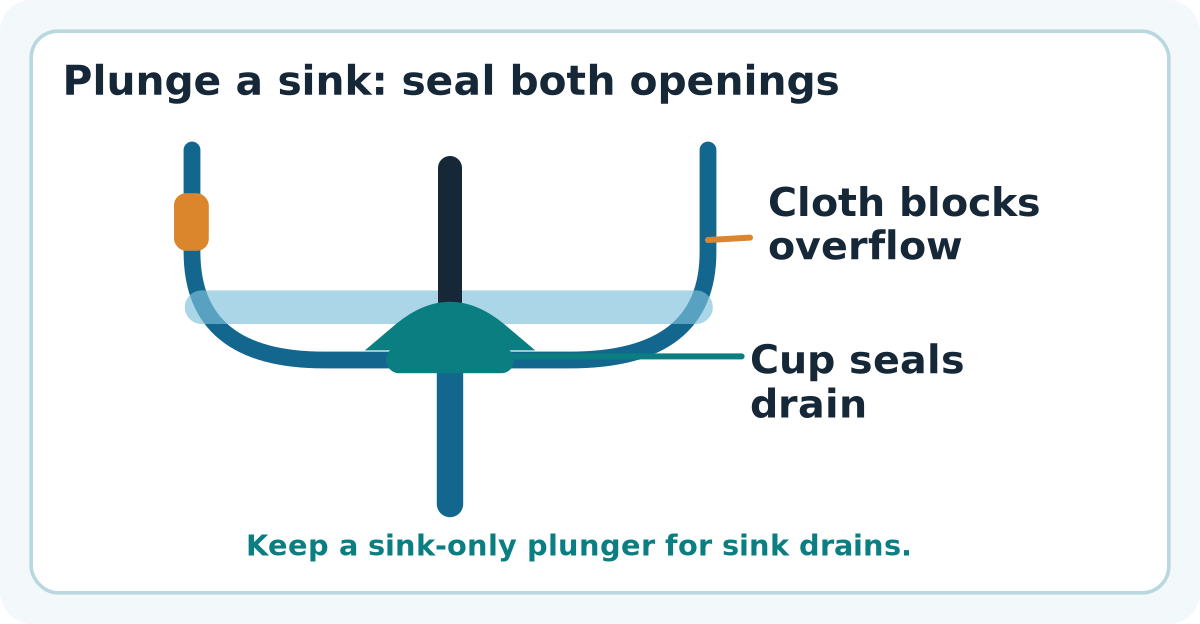
The cloth over the overflow is important: without it, much of the pressure can escape. If plunging makes dirty water appear at another fixture, stop—the obstruction may be farther down the shared drainage system. If joints below the sink start dripping, do not keep plunging against them.
Step 3: consider only a simple removable trap
A P-trap is the curved, water-filled section under many sinks. If the drain is still blocked and the trap has accessible, intact slip-joint nuts, a careful cleanout may remove hair, food residue or a small object. Place a bucket beneath it, loosen the slip nuts without excessive force, empty the bend, clean it with a brush, and reconnect the seals in their original orientation. Test slowly for leaks before normal use.
Skip disassembly if there are glued joints, corroded metal, leaking fittings, no room for a bucket, a disposal or dishwasher connection you cannot identify, or you rent and are not authorized to work on the plumbing. A separate detailed guide is available for trap cleaning; guessing how to detach unfamiliar pipes can create a larger leak than the clog.
What about hot water, baking soda, or vinegar?
Warm tap water is reasonable for a routine flush after visible debris is removed. It will not reliably dissolve a compacted hair plug or a foreign object. Avoid pouring boiling water into an unknown sink assembly: some finishes, porcelain, plastic parts, seals or aged joints may be damaged by abrupt heat. Baking soda and vinegar fizz, but the reaction is not a dependable substitute for removing solid hair or food from a drain. Do not combine them with a commercial cleaner or with bleach; this guide deliberately avoids household chemical mixtures.
For sinks connected to a septic system, EPA recommends avoiding chemical drain openers and controlling what enters the sink. The useful long-term fix is generally to catch solids and remove obstructions rather than repeatedly pouring products down the drain.
If the sink still will not drain
It briefly clears, then backs up again
The obstruction may be only partly removed, or it may be farther into the branch pipe. Avoid repeated force. A plumber can diagnose and clear the line using the right equipment without damaging older fittings.
The sink gurgles and another drain rises
Stop using the affected fixtures. A shared-line obstruction or venting problem is possible; a simple local plunger is no longer a sufficient diagnosis.
The trap is clean but the water still stands
Do not assume the house drain is clear. A blockage beyond the trap, a poorly configured drain or a building-level issue can cause the same symptom. Contact building maintenance or a plumber rather than inserting a powered auger into unfamiliar piping.
Water leaks under the sink after your test
Stop running water, contain the drip and reassess only the connection you touched. If a seal is worn or a nut will not reseat by hand, stop and seek help. Do not overtighten plastic nuts or use sealant as a substitute for the correct washer.
Prevent the next clog
Use a removable strainer to catch hair or food scraps. Wipe greasy pans into the trash before washing, and never pour cooking grease or oil into the drain. Check and clean an accessible bathroom stopper periodically. A faucet that drains slowly again within days deserves investigation rather than a standing habit of adding products.
Frequently asked questions
Is plunging safer than chemical drain cleaner?
For a routine sink clog with no known chemical residue and sturdy plumbing, careful mechanical cleaning is usually a good first attempt. Plunging is not safe when drain chemicals may be present or pipes are fragile.
Should I pour boiling water into a blocked sink?
No. Use normal warm tap water for a rinse after cleaning. Boiling water has uncertain benefits and can pose scalding and material-damage risks.
Can a clogged sink be a sewer problem?
Yes, particularly when several drains are affected, foul wastewater returns through another fixture or the issue recurs quickly. Stop water use and arrange professional diagnosis.
Sources and further reading
- Lowe’s: How to Unclog a Sink: 7 Easy Tips to Try (checked 2026-10-27).
- U.S. EPA: How to Care for Your Septic System (checked 2026-10-27).
- U.S. CDC: Cleaning and Disinfecting with Bleach (checked 2026-10-27).
- Poison Control: What’s in drain cleaner and what happens if you drink it? (checked 2026-10-27).
Use the checklists as you go, and confirm the result before moving on to a more involved repair.