How to Make a Weekly Home Cleaning Checklist
Write down daily essentials, choose the weekly cleaning tasks that matter for your home, assign each to a realistic day and person, and leave a catch-up slot. Keep the checklist short enough to follow and adapt it for children, pets, allergies, illness and the surfaces in your home.
Quick answer: Write down daily essentials, choose the weekly cleaning tasks that matter for your home, assign each to a realistic day and person, and leave a catch-up slot. Keep the checklist short enough to follow and adapt it for children, pets, allergies, illness and the surfaces in your home.
Who this is for: A reusable planning method for ordinary households; it is not a medical disinfection protocol, a mold-remediation checklist or a substitute for appliance maintenance instructions.
Before you begin: materials and safety
Do not schedule risky ladder work, electrical disassembly or unknown chemical combinations as routine chores. Regular soap-and-water cleaning is sufficient in many ordinary home situations; targeted sanitizing or disinfection requires the right product and situation. Follow product labels and never combine bleach with ammonia, acids or other cleaners.
What to gather:
- Paper, notes app or spreadsheet with seven day columns
- A list of rooms and high-touch places in your home
- Appropriate labeled cleaning products, cloths, bin liners and vacuum or mop
- Household member availability and manufacturer surface-care instructions
Step-by-step instructions
Step 1: Walk through your home and list actual cleaning zones
Write down kitchen, bathroom, bedroom, living area, entry, floors and laundry space. Add special zones such as pet feeding stations, frequent spills, accessibility aids or shared work surfaces. Start from tasks you actually perform, rather than copying a one-size-fits-all list that assumes every home has multiple bathrooms or a dishwasher.
Step 2: Separate daily reset tasks from weekly deep-enough tasks
Daily essentials generally include clearing food-contact surfaces, handling dishes, managing trash as needed and quickly addressing spills. Weekly tasks commonly include dusting, floor cleaning, bathroom fixture cleaning, changing bedding and checking food storage. Assigning a weekly task does not mean ignoring visible dirt until that day; attend to spills or contamination when they happen.
Step 3: Prioritize high-touch and high-mess areas
Touch points, kitchen counters, sinks, bathroom surfaces and high-traffic floors usually deserve more attention than decorative shelves. In homes with infants, immunocompromised people or someone who is ill, adjust according to relevant public-health and clinical advice. CDC guidance distinguishes routine cleaning from situations requiring sanitizing or disinfection; avoid adding powerful chemicals to every task by default.
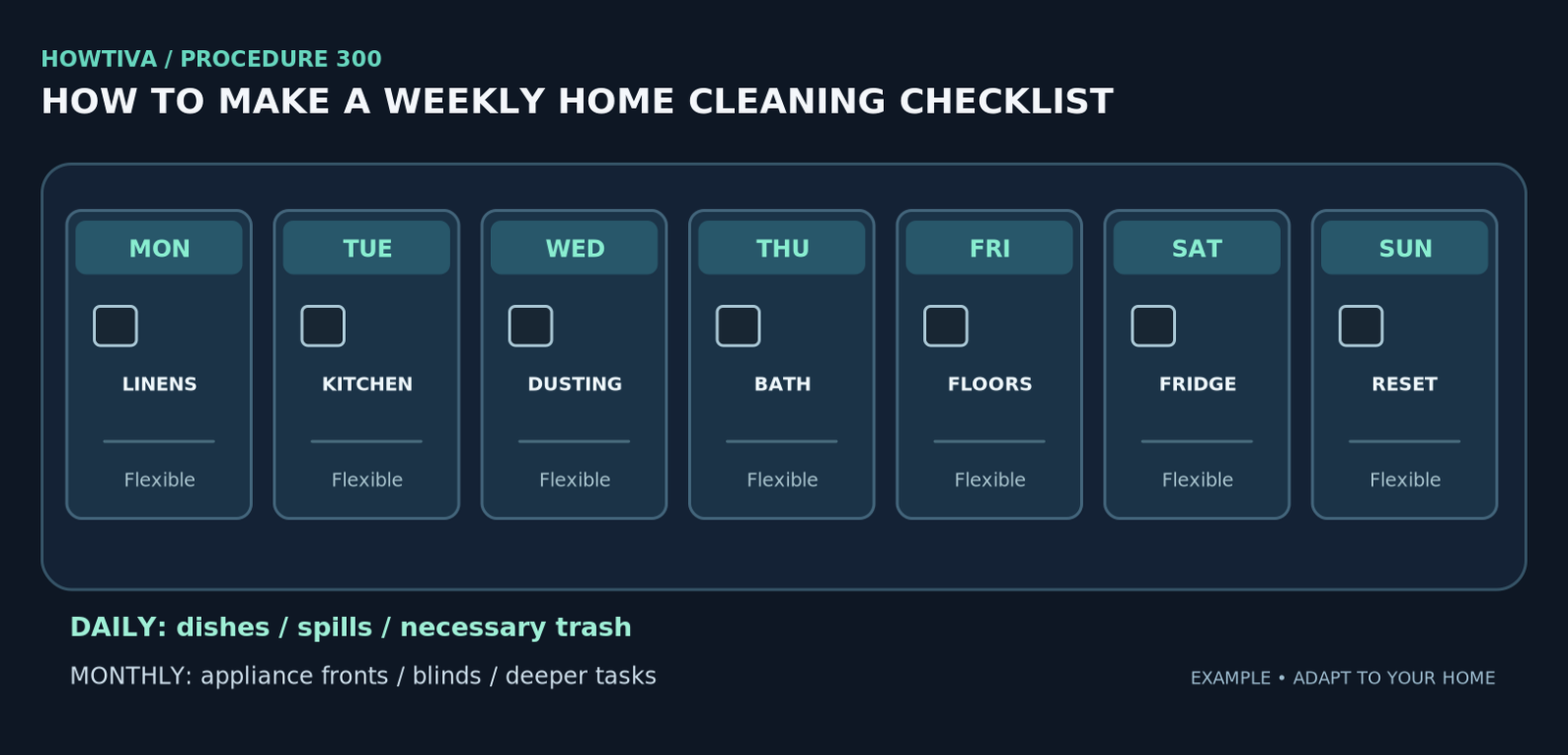
Procedure illustration: original step sequence showing how to make a weekly home cleaning checklist; follow material and manufacturer limitations, not a simulated hands-on test.
Step 4: Spread weekly tasks across the seven-day grid
Choose manageable clusters rather than a single overwhelming cleaning marathon. Example: Monday bedding/laundry; Tuesday kitchen inspection; Wednesday dusting; Thursday bathrooms; Friday floors; Saturday fridge spot-check and catch-up; Sunday rest or adjust. This is an example, not a required weekly schedule: swap tasks around shift work or school routines as needed.
Step 5: Write a concrete definition of done for each row
Replace “clean bathroom” with “wipe sink and faucet; clean toilet using its product instructions; clean mirror; empty bin; mop floor as appropriate.” Replace “do floors” with “vacuum high-traffic areas and mop suitable hard flooring if needed.” Name the right tool, responsible person and completion checkbox. This stops ambiguous chores being repeatedly deferred.
Step 6: Test for one week, revise, and review seasonal items
After seven days, check what was easy, what was skipped and whether effort was distributed fairly. Move large tasks to a more realistic slot, shrink unnecessary details and keep a separate monthly/seasonal list for fans, window tracks, cabinet fronts and appliance deep cleaning. Share the checklist where household members will see it, but do not mistake the checklist for proof that a surface was disinfected.
Real-world cases that change the plan
Small apartment with irregular shifts
Put two or three quick weekly blocks on the least busy days, preserve a flexible catch-up slot, and make daily resets short. Consistency matters more than matching the example calendar.
Home with a shedding pet or allergy symptoms
Increase floor and upholstery cleanup according to actual soil and the vacuum/cleaning product guidance. Consider washable pet bedding and frequent high-traffic dusting rather than arbitrarily disinfecting every room.
Troubleshooting: when the first attempt does not work
- The list is too long to finish: Rank must-do hygiene chores first; move optional deep cleaning to monthly. Break large tasks into smaller zones.
- Household members interpret tasks differently: Add concrete completion criteria, tools and assigned owner; use checked boxes rather than vague room labels.
- Products are damaging finishes: Stop, review care instructions and replace the procedure with a compatible alternative; one cleaner is not suitable for every surface.
- Everything piles up on Sunday: Rebalance weekdays and leave a catch-up slot; rotate less frequent jobs rather than treating every task as weekly.
Alternatives and important model differences
- Use a paper sheet on the fridge if a shared digital checklist is less accessible.
- Use a repeating phone list or spreadsheet when you need assigned owners and history.
- For disability, mobility constraints or limited resources, adapt task size and use safe professional support when practical.
Common mistakes to avoid
Do not schedule unsafe high-ladder tasks for unsupervised children, prescribe disinfection to every room, or put all cleaning on one overbooked day.
Use the checklist as a living plan. In a home with multiple adults, assign names as well as days; a missed checkbox should trigger rescheduling, not a false claim that the task was completed.
Frequently asked questions
Do I need to disinfect everything once a week?
No. CDC advises that routine cleaning is usually enough in many homes; illness and specific contamination create different needs.
What should always be on the weekly list?
A workable baseline usually includes floors, dusting, bathrooms, laundry/bedding as needed, and checking food storage. Adapt frequency to your home.
How often should I change the checklist?
Reassess after a trial week and when household conditions change; add seasonal chores to a separate list.
Sources & Further Reading
- American Cleaning Institute — Home Cleaning Routine (checked 2026-10-27)
- CDC — When and How to Clean and Disinfect Your Home (checked 2026-10-27)
- American Cleaning Institute — Levels of Cleaning for Better Health (checked 2026-10-27)
Use the checklists as you go, and confirm the result before moving on to a more involved repair.