How to Tighten a Loose Door Handle
Keep the door open so you cannot lock yourself out. Determine whether the entire handle plate is loose or only the lever/knob wobbles.
Quick answer: Keep the door open so you cannot lock yourself out. Determine whether the entire handle plate is loose or only the lever/knob wobbles. On an ordinary residential handle, snug the accessible mounting screws with the matching screwdriver; for a concealed rose or lever set screw, first follow the lockset’s instructions to expose the correct fastener. Test the latch several times with the door open before closing it.
A rattling interior lever may need two mounting screws tightened, but a drooping lever, failing latch, or loose keyed deadbolt can indicate a worn spring or broken mechanism. Some decorative covers hide screws. Set screws in handles can be hex-head or slotted. Door locks matter for life safety, so do not disassemble a main exit lock when you cannot confirm it will work afterward.
Check applicability and set up safely
You will need:
- Hand screwdriver correctly matched to visible screws
- Small hex key only if the actual lever has a matching set screw
- Flashlight and manufacturer’s lockset instructions
- A helper to keep the door from closing while checking
Step-by-step procedure
Step 1: Keep the door open and test before adjusting
Operate the knob, lever and latch with the door open. Does the entire backplate wiggle, does only the lever spin, or does the latch fail to retract? Check any privacy lock or key function without shutting the door. If the latch will not reliably withdraw, call for repair or replacement instead of merely tightening the outside plate.
Step 2: Find the actual mounting system
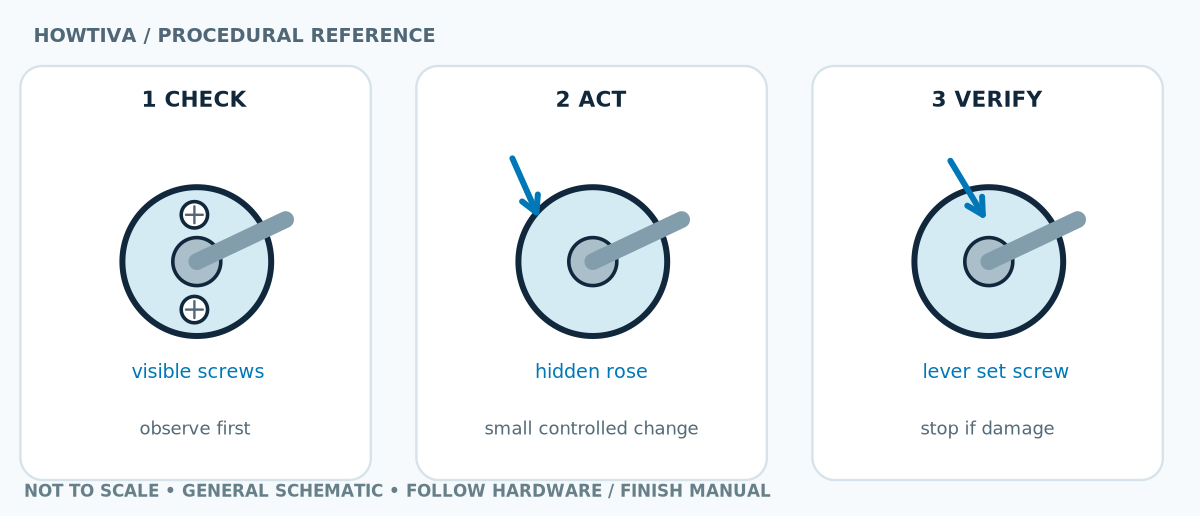
Look for two screw heads on the inside plate, or a narrow seam around a decorative cover (rose) hiding the screws. Some handles also have a small detent opening or set screw near the lever stem. Compare with the exact hardware model, since trying to pry a fixed rose damages the finish.
Step 3: Snug exposed fasteners evenly
Hold the opposite handle square in the door. With the correct screwdriver, tighten mounting screws alternately and gradually. Stop once the plates are snug and the lever operates freely; excessive tightening can bind the mechanism or damage the door face.
Step 4: Handle a concealed rose according to the manual
If the model uses a removable trim cover, follow its release method, then gently tighten the concealed mounting screws. Refit the cover fully. For a loose lever alone, check the correct manufacturer-specified set screw or detent seating rather than turning random screws.
Step 5: Test the latch, privacy function and free movement
With the door still open, cycle the lever several times; test locking and unlocking only where supported by the hardware. Watch that the latch bolt returns fully and that the plate stays still. Then close the door gently and check whether it latches without needing force.
Two real-world situations to compare before repeating a step
Bathroom lever rattles but latch works
Look for the mounting screws under or through the interior plate. Hold both sides aligned while snugging gradually. Test the privacy release before shutting the door; a loose handle is particularly risky if someone could become locked in.
Front door lever wobbles with a stiff deadbolt
Treat the deadbolt and lever as security hardware, not an ordinary cosmetic repair. If locking or exit function is unreliable, stop adjusting random screws and seek qualified lock service.
Troubleshooting: when the first check does not solve it
Screws spin without gripping. Fasteners or internal posts may be damaged or wrong length. Do not overdrive them; check exact replacement parts.
Handle is snug but still droops. Lever return spring or internal component may be damaged. Tightening mounting screws will not fix that.
Door only latches when lifted. Check hinge alignment and strike position rather than pulling the screws harder.
Exterior keyed handle or emergency egress issue. Stop if security or exit function is unreliable and get qualified lock hardware service promptly.
Alternative paths and brand-specific differences
For a privacy knob, confirm emergency-release function is intact. For mortise, multipoint and smart locks, follow specific manufacturer service instructions; the general residential two-screw procedure may not apply.
When to stop and ask for help
Stop if the lock or exit mechanism is unreliable, the latch stays retracted or someone could be trapped. Do not compromise a fire or security door.
Frequently asked questions
Should I remove the whole lock?
Usually not. Exposed mounting screws may be sufficient. Remove trim only when the exact hardware procedure calls for it.
Can overtightening cause a problem?
Yes. It can bind latch motion, strip threads or crush the surface. Stop when secure and functional.
Sources & further reading
-
Lowe’s: How to Fix a Loose Door Handle
-
Lowe’s: How to Fix a Door Knob
Use the checklists as you go, and confirm the result before moving on to a more involved repair.