How to Clean a Glass Shower Door
Rinse a cool shower door lightly, wipe its glass with water or a mild detergent diluted according to the door maker, rinse again and remove droplets with a soft squeegee and microfiber cloth.
Quick answer: Rinse a cool shower door lightly, wipe its glass with water or a mild detergent diluted according to the door maker, rinse again and remove droplets with a soft squeegee and microfiber cloth. Keep cleaner off vulnerable tracks, metal finishes and coated surfaces. For coated CleanCoat doors, Kohler advises water, soft cloth and squeegee rather than abrasives.
For intact fixed or sliding tempered-glass shower doors. Treat factory coatings, films, etched panels and frame finishes as separate materials; do not use one acidic limescale recipe on the whole enclosure. Never climb on the tub edge or lean on a door to reach high corners.
Before you begin: safety and materials
What you need:
- Door maker and any protective-coating name
- Soft clean cloth or non-scratch sponge
- Mild detergent compatible with glass and the surrounding trim
- Soft blade squeegee in good condition and dry microfiber towel
- Non-slip footing and gloves when recommended on product labels
Step-by-step instructions
Step 1: Inspect glass, coating and the adjacent materials
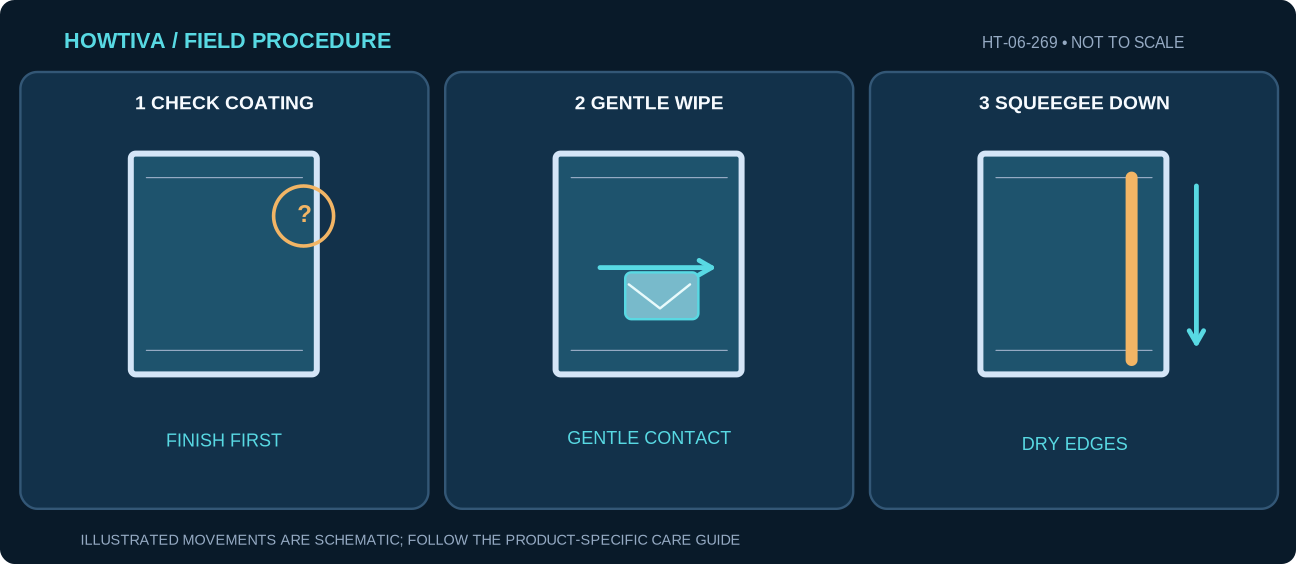
Look for manufacturer markings and see whether the glass has a water-repellent coating such as CleanCoat. Check hinges, wheels, frameless seals, painted frames and silicone seams. Stop if a pane has chips, a loose mounting bracket or glass that moves unexpectedly.
Step 2: Clear loose grit and wet the accessible surface
Use a damp soft cloth or gentle rinse on cool glass, not a high-pressure stream into tracks and wall joints. Pick up mineral particles rather than dragging them across the pane. Keep the floor dry enough to avoid a slip hazard.
Step 3: Wipe mild cleaner without abrasive tools
For Kohler/Sterling shower-door glass, diluted mild detergent and water are allowed for occasional cleaning. Clean the pane in overlapping strokes with microfiber. Do not use blades, bristle brushes, scouring pads or aggressive powder cleaners on unknown coatings.
Step 4: Rinse without soaking the aluminum trim
Remove cleaner with clean water or a well-wrung soft cloth. Kohler warns that abrasives, ammonia, bleach, acids, solvents and prolonged cleaner dwell can damage metal finishes; do not let a glass treatment collect in the frame or gasket channels.
Step 5: Squeegee downward and dry the edges
Draw a clean squeegee from the top toward the lower edge, overlapping each pass. Wipe the rubber between passes if it collects debris. Finish the bottom edge and accessible track lip with a soft dry towel; do not force the seal away from the glass.
Step 6: Improve airflow and repeat after showering
Leave the enclosure ventilated when safe and compatible with your bathroom design. A quick squeegee after use slows water spotting and soap film. Periodically inspect sliding-wheel debris separately following the door’s hardware manual.
Practical examples: when the procedure changes
A coated frameless glass door looks cloudy
Use water and microfiber first. Kohler CleanCoat specifically warns against abrasive products; look up the actual door coating before escalating.
The glass looks clean but the bottom track stays slimy
Gently wipe accessible track debris with a soft cloth. Hidden drain ports, removable guide parts and wheel adjustments differ by model; avoid dismantling them.
Troubleshooting: what can go wrong
White spots reappear overnight: Dry the glass and edges after each shower; check hard-water mineral buildup and use only coating-safe products.
The squeegee leaves lines: Wash the blade and remove grit; a nicked rubber lip can cause streaks or scratches.
Cleaner marks the metal frame: Stop application and rinse in accordance with its finish manual; stronger acid can worsen staining.
Door feels loose while cleaning: Stop and arrange qualified glazing/hardware service; cleaning should not move a tempered-glass support.
Alternatives, materials and model differences
If the glass has no protective coating and stubborn mineral scale remains, consult its glass maker for a compatible limescale remover, patch test and finish protection. For coated glass, water and mild detergent are usually the safer default. Never substitute a glass scraper on tempered or coated glass.
Stop conditions and when to request qualified help
Stop for cracked or chipped glass, failed hinges or wheels, water leaks through wall joints, electrical proximity or any cleaning product that conflicts with the glass coating/metal finish documentation.
Frequently asked questions
Can I use an abrasive powder on a shower door?
Not as a standard method. Coatings and anodized frames are vulnerable to scratching; Kohler recommends gentle water, soft cloth and squeegee.
Why dry glass if it will get wet again?
Reducing standing hard-water droplets helps limit evaporated mineral deposits between cleanings.
Sources & further reading
-
Sterling / Kohler: How to Clean & Care for Bath & Shower Doors
-
Kohler Assist: Shower Door CleanCoat Glass Treatment
Use the checklists as you go, and confirm the result before moving on to a more involved repair.