How to Stop a Door from Squeaking
Locate the squeak by slowly opening and closing the door, inspect the hinge screws, and tighten any that are visibly loose.
Quick answer: Locate the squeak by slowly opening and closing the door, inspect the hinge screws, and tighten any that are visibly loose. If the squeak comes from a sound hinge pivot, apply a small amount of lubricant suitable for the hinge finish and door maker’s instructions; cycle the door and wipe away excess. Do not force a bent hinge or remove pins from an unsupported heavy door.
Not every creak is a dry hinge. A door can scrape the frame, rub a weather seal, have a loose screw or squeal at a closer. Treating every noise with spray can stain finished wood, attract dirt and miss an alignment problem. Interior residential doors are generally low-risk to inspect, but fire-rated doors, heavy glass doors and doors with special closers require their manufacturer’s maintenance instructions.
Check applicability and set up safely
You will need:
- Flashlight and appropriately sized hand screwdriver
- Clean lint-free cloth and floor protection
- Small controlled applicator for maker-approved hinge lubricant
- Helper if door is heavy or unusually mounted
Step-by-step procedure
Step 1: Listen with the door moving slowly
Open the door halfway and close it gently several times, noticing when the sound starts. Put your ear near the hinge side without pinching fingers. A squeal at the hinge barrel suggests friction; scraping along the top or latch edge suggests a fit problem.
Step 2: Check and snug visibly loose hinge screws
Support the door if needed, then tighten only loose accessible screws with a hand screwdriver. Avoid stripping wood or moving a fire-door closer. A sagging door can rub and squeak even if its pivots are lubricated.
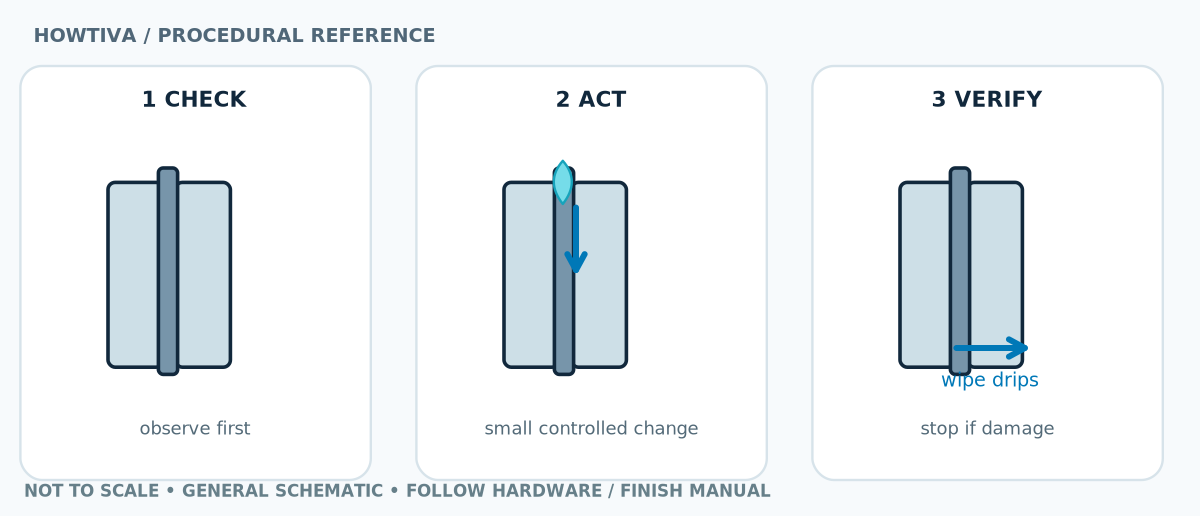
Step 3: Clean the outside of the hinge joint
Wipe lint, dust and old drips from the accessible hinge barrel and adjacent finish. Protect nearby painted surfaces and flooring with a cloth. If the hinge is cracked, twisted or badly corroded, replacement or qualified repair is safer than oiling.
Step 4: Apply a tiny amount at the moving pivot
Use lubricant only if your hinge maker allows it; low-volume light oil or a hinge-specific product is commonly used for ordinary steel pivots. Apply at the upper knuckle/pin interface, not the door face. Avoid an indiscriminate wide spray on finishes and never mix unverified lubricants with other chemicals.
Step 5: Work the hinge and wipe away excess
Swing the door gently a few times to distribute the lubricant. Blot drips immediately. If the squeak remains, inspect another hinge or check for wood-on-wood contact rather than applying repeated large doses.
Step 6: Recheck full function
Confirm the door opens freely, latches, and has no rubbing that requires lifting the handle. For smoke- or fire-rated assemblies, do not remove, prop open or alter the closer or self-closing function.
Two real-world situations to compare before repeating a step
Quiet when open, squeaks at the end of closing
The hinge might not be the culprit: a rubber stop, latch strike or tight weather seal can make the sound. Locate the exact contact point before using lubricant.
Hinge is dark with oily residue
Wipe away old drips and inspect. If the hinge is bent, heavily rusted or worn, repeated oiling only masks the source and may stain the door.
Troubleshooting: when the first check does not solve it
Noise only appears near the fully closed position. Inspect the latch strike, door stop and weatherstripping; a hinge pivot may not be the source.
Black residue appears near the hinge. Old oil may be carrying metal dust. Wipe and inspect for accelerated hinge wear.
Hinge visibly bends or the door drops. Stop cycling the door aggressively. Support it and have hinge/fastener alignment repaired.
Squeak returns quickly. Underlying misalignment, debris or worn bearing surfaces may need a matched hinge replacement.
Alternative paths and brand-specific differences
If the product has sealed bearings, spring hinges, a hydraulic closer or special finish, use its maintenance manual; some components are not intended to be lubricated by the homeowner.
When to stop and ask for help
Stop at sagging hinges, door fall risk, faulty fire-door closer, severe rust or bent metal. A lubricant is not a substitute for sound hardware.
Frequently asked questions
Should I remove the hinge pin?
Not as a first step. Removing a pin from a heavy or misaligned door can make it fall or twist.
Can I use cooking oil?
It is not a reliable hinge-maintenance choice and can leave sticky residue. Use the hinge maker’s recommended product.
Sources & further reading
-
The Home Depot: How to Fix an Interior Door
Use the checklists as you go, and confirm the result before moving on to a more involved repair.