How to Wash Microfiber Cloths Properly
Shake out loose dirt, separate microfiber cloths from lint-producing textiles, wash using an appropriate amount of compatible detergent and the cloth’s care-label temperature, skip fabric softener and dryer sheets, then dry fully using the approved low-heat or air-dry method.
Quick answer: Shake out loose dirt, separate microfiber cloths from lint-producing textiles, wash using an appropriate amount of compatible detergent and the cloth’s care-label temperature, skip fabric softener and dryer sheets, then dry fully using the approved low-heat or air-dry method.
Who this is for: For reusable household microfiber cleaning cloths. Specialist lens wipes, anti-static coated cloths, mop pads, medical textile systems and cloths contaminated with hazardous chemicals require their own manufacturer or workplace protocol.
Before you begin: materials and safety
Do not mix cloths used on food-contact surfaces with heavily contaminated bathroom or chemical-cleanup rags without suitable handling. If the cloth touched bleach, pesticides, solvents, bodily fluids or other hazardous material, refer to product safety instructions and local disposal guidance rather than ordinary laundry. Manufacturer-approved temperatures vary considerably: do not invent one universal hot-water setting.
What to gather:
- Laundry detergent suitable for the cloth and soil type; product care label
- Mesh laundry bag if small pieces could be lost
- Washing machine or clean sink for approved hand-washing
- Clean drying rack or dryer with fabric-approved heat setting
Step-by-step instructions
Step 1: Read the fiber and manufacturer care instructions
Identify the cloth brand, usage and washing symbols. A fine optical cloth can have different rules from a heavy-duty cleaning rag, even though both are called microfiber. Check for fabric treatments, stitched edges and lint-trapping pockets. A softener restriction is common, but bleach and machine heat allowances vary between manufacturers; obey the specific label.
Step 2: Shake off grit and keep incompatible cloths apart
Remove visible crumbs, hair, sand and dirt outdoors or over a bin; avoid snapping dusty rags near people. Divide microfiber from terry towels, cotton sweatshirts, fluffy blankets and tissue-contaminated laundry that shed lint. Separate dark or heavily soiled cloths when color transfer is possible. Keep sanitary-area cloths separate from kitchen or glass-only cloths to reduce cross-contamination.
Step 3: Pretreat concentrated grease using a compatible method
For a cooking-grease rag, apply a little compatible laundry detergent to the affected zone and work gently with your fingers if its maker permits. Avoid soaking in arbitrary solvents, dish-degreasers or fragranced softening products. Thick oily buildup may require repeating a normal laundering cycle. Heavily contaminated or degraded cloths are sometimes more appropriately retired than repeatedly washed.
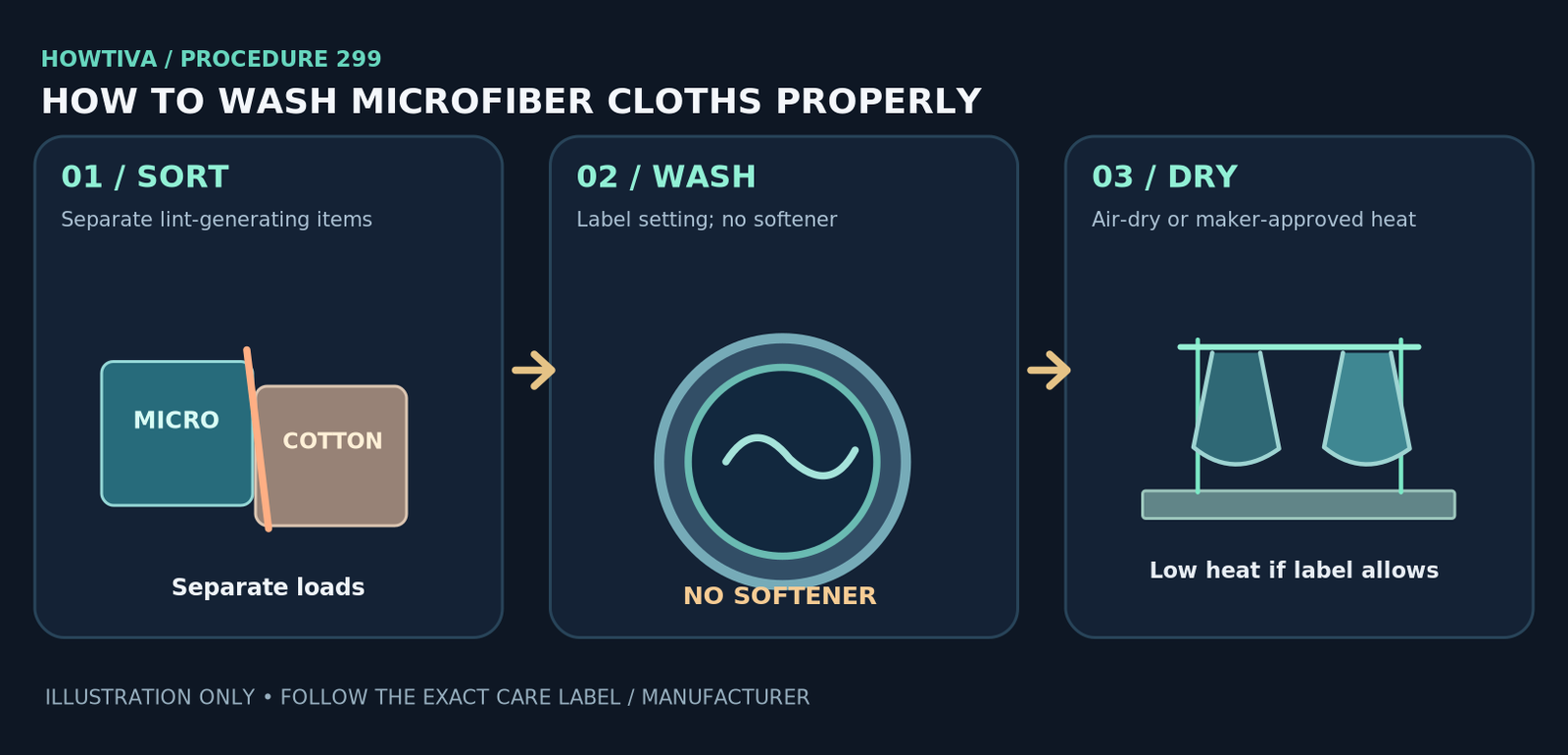
Procedure illustration: original step sequence showing how to wash microfiber cloths properly; follow material and manufacturer limitations, not a simulated hands-on test.
Step 4: Wash with a sensible load and no fabric softener
Do not overfill the machine: cloths need room to move and rinse. Follow the garment label for water temperature and cycle; a gentle or normal cycle is often sufficient for ordinary household cloths. Use an appropriate measured detergent amount rather than a large dose, which may leave residue. Skip liquid softener and dryer sheets; manufacturer guidance notes that coating fibers can affect cleaning performance.
Step 5: Rinse fully, then dry as permitted
If detergent remains or the cloth feels slippery, use an extra rinse if allowed. Air-dry on a clean rack or machine dry with label-approved low heat; some makers permit warmer settings while others do not. Remove promptly once dry and avoid dryer sheets. Do not iron microfiber unless the maker expressly permits it; high heat can damage synthetic fibers.
Step 6: Inspect and store dry cloths by purpose
A clean cloth should feel free of grit and heavy residue, with no strong stale odor. Store completely dry microfiber in a clean container, separating glass/lens cloths from kitchen and bathroom cloths. If fibers are matted, edges scratch, or it leaves lint on glass even after laundering, reassign it to rougher tasks or replace it. Record color coding if multiple people share supplies.
Real-world cases that change the plan
Glass cloth now leaves streaks
Launder away detergent and softener residue, dry correctly, then test on a small glass area. If streaks persist, check whether the cloth picked up wax or has worn fibers.
Microfiber towel washed with cotton bath towels
Expect lint transfer. Shake or gently brush dry lint away and run a separate compatible wash if necessary; prevent the problem by segregating loads next time.
Troubleshooting: when the first attempt does not work
- The cloth feels slick or waxy: Avoid further softener or dryer sheets, use a manufacturer-compatible detergent wash and thorough rinse.
- The fabric smells sour after washing: Check that the washer itself is clean and drying was complete; rewash promptly within label limits and store only fully dry.
- Cloths shed colored dye: Separate colors and check product care guidance; do not use on delicate pale finishes if colorfastness is uncertain.
- Microfiber begins scratching a surface: Stop. Grit trapped in fibers or sewn edges can scratch even if the base microfiber is soft; retire it from delicate surfaces.
Alternatives and important model differences
- For lightly soiled cloths, certain manufacturer care guides allow hand washing with a mild cleaning product, thorough rinsing and hanging to dry.
- Microfiber mop heads designed for commercial sanitation may require more stringent laundering than household dust cloths.
- For lens-specific optical wipes, defer to the lens and cloth manufacturer rather than using household laundry assumptions.
Common mistakes to avoid
Do not combine microfiber with lint-producing bath towels, use dryer sheets, or assume a single temperature applies to every brand. Do not leave dirty wet cloths bunched inside a bucket.
Household microfiber is intended to be reused, but heavily contaminated, torn or persistently abrasive cloths should be retired for less delicate work or replaced. Cleaning a cloth does not make it sterile.
Frequently asked questions
Why should I avoid fabric softener?
Manufacturers such as Norwex advise against it; residue may reduce cleaning performance and attract or trap other soil.
Is hot water always better?
No. Different textiles and finishes tolerate different temperatures; read the label and use the permitted setting.
May I wash microfiber with cotton towels?
It is better to separate microfiber from lint-producing fabrics, which can deposit lint in the fine fibers.
Sources & Further Reading
- Norwex — House Cleaning Microfiber Cloth Pack — Use & Care (checked 2026-10-27)
- Norwex — Bottle Brush EnviroSleeve — Use & Care (checked 2026-10-27)
- American Cleaning Institute — Home Cleaning Routine (checked 2026-10-27)
Use the checklists as you go, and confirm the result before moving on to a more involved repair.