How to Remove Old Adhesive from a Wall
Identify what is stuck to the wall and what the wall is finished with before removing anything. On a Command-style stretch-release strip with an intact tab, hold the base and pull the tab slowly straight down against the wall as the maker instructs.
Quick answer: Identify what is stuck to the wall and what the wall is finished with before removing anything. On a Command-style stretch-release strip with an intact tab, hold the base and pull the tab slowly straight down against the wall as the maker instructs. For unknown tape or dried glue, begin with gentle dry removal and an inconspicuous test; stop if paint or wallpaper starts lifting. Do not apply solvent or heat blindly.
Old adhesive is not one material. A removable stretch-release wall strip uses a very different release method from foam mounting tape, wallpaper paste, sticker glue or construction adhesive. Flat latex paint, soft plaster, vinyl wallpaper, decorative coatings and fresh paint can all be damaged even by “gentle” methods. A clean release cannot be guaranteed.
Check applicability and set up safely
You will need:
- Clean fingers or plastic non-sharp edge
- Soft dry microfiber cloth
- Manufacturer instructions or packaging for the adhesive
- Protective sheet for floor; suitable touch-up paint only if necessary
Step-by-step procedure
Step 1: Identify adhesive and wall before touching it
Check whether the item is a branded stretch-release hook, ordinary tape, poster adhesive, construction adhesive or something unknown. Inspect for peeling paint, bubbling, dampness, wallpaper edges and any sign that the object conceals cabling. Fragile or historic finishes need specialist care.
Step 2: Take down any load safely
Support the frame or hook so it cannot fall while the adhesive releases. For a multi-piece removable hook, detach the outer hook part first if the instructions say so. Protect fragile objects and keep children away from the work area.
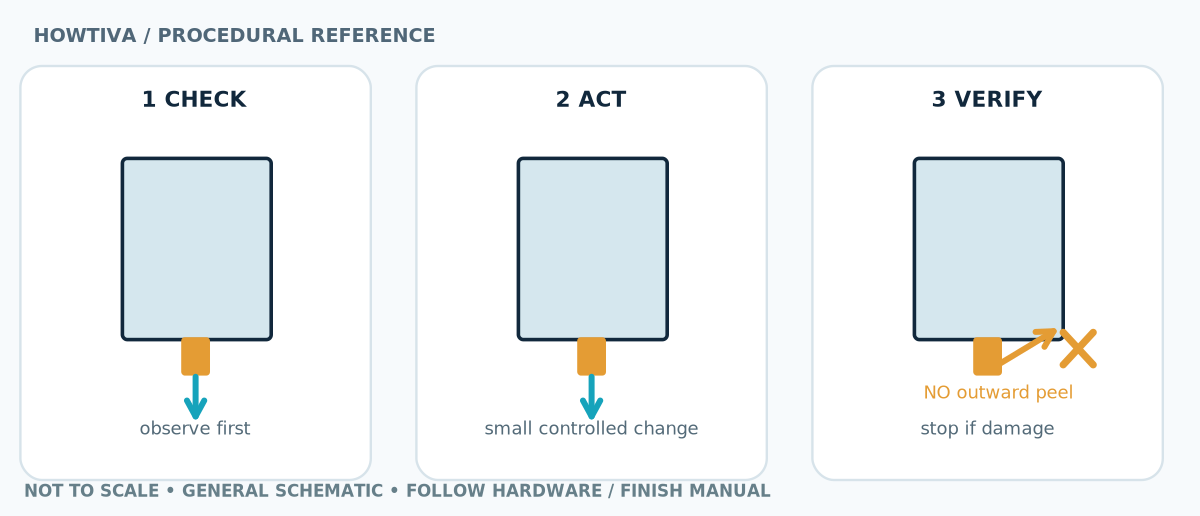
Step 3: Use the correct stretch-release method if applicable
For Command-branded products with an accessible tab, hold the mounting base lightly and pull the tab slowly straight down along the wall, not outward. Product instructions may specify a long stretch. Do not grab the hook and lever it off at ninety degrees; that can tear paint.
Step 4: Treat a broken tab as a different job
If the intended release tab is missing, stop before prying. Command advises consulting product instructions; depending on the specific product, a fine string or dental floss may separate the base, or controlled gentle warmth may be an option. Heat can damage paint, wallpaper and nearby electrical items, so do not assume it is safe everywhere.
Step 5: For other residue, start with the least aggressive dry method
On sound, cured, washable paint only, lightly roll a very small piece of loose adhesive with a clean fingertip or soft cloth; do not scrape with a metal blade. For sticky patches that will not lift, consult the paint and adhesive makers about safe removers and test an inconspicuous spot before applying anything.
Step 6: Inspect and finish without spreading damage
Stop immediately if the coating softens, becomes shiny, transfers color or lifts. Let any approved surface treatment dry and inspect in sideways light. Some damaged paint will need surface repair and repainting rather than further chemical cleaning.
Two real-world situations to compare before repeating a step
Hook base still attached but the tab snapped
Do not use the hook as a pry bar. Locate the maker’s broken-tab instructions; some specifically allow floss or gentle heat in suitable circumstances. If the paint begins lifting, stop.
Old foam tape on new matte paint
The tape adhesive and weak curing paint may pull off together. Limit attempts to gentle, inconspicuous testing. A clean removal cannot be guaranteed and a patch/paint repair may be the least damaging route.
Troubleshooting: when the first check does not solve it
A Command-style strip snaps. Do not pull the mounting base outward; use its broken-tab guidance.
Paint lifts with the tape. Stop; the finish may be uncured, weak or poorly bonded. Retouching may be necessary after the surface is sound.
Sticky patch remains after the object comes off. Identify adhesive and paint chemistry before choosing a remover; solvent compatibility cannot be assumed.
Wallpaper begins to peel. Stop. Water, steam, heat or solvent may release wallpaper adhesive and enlarge the damage.
Alternative paths and brand-specific differences
If paint is already tearing, the goal changes from adhesive cleaning to wall finishing. For difficult industrial adhesive, lead-era paint, unknown hazardous coatings or historic plaster, use qualified help. Never mix solvents or cleaners.
When to stop and ask for help
Stop at color transfer, softened paint, peeling wallpaper, suspected hazardous coating or concealed wiring. Surface damage can worsen with each attempt.
Frequently asked questions
Can I use acetone or strong adhesive remover?
Not as a general wall recommendation; many finishes can soften, discolor or dissolve. Seek explicit compatibility and test first.
Is heating the glue always safe?
No. Heat can damage painted and paper finishes; only consider manufacturer-approved procedures with safe surroundings.
Sources & further reading
-
Command™ Brand: Have questions? Check out Command FAQs
-
Command™ Brand: How to Use Clear Hooks
-
Command™ Brand: How to Use Picture Hanging Strips
Use the checklists as you go, and confirm the result before moving on to a more involved repair.