How to Wash White ClothesWithout Bleach
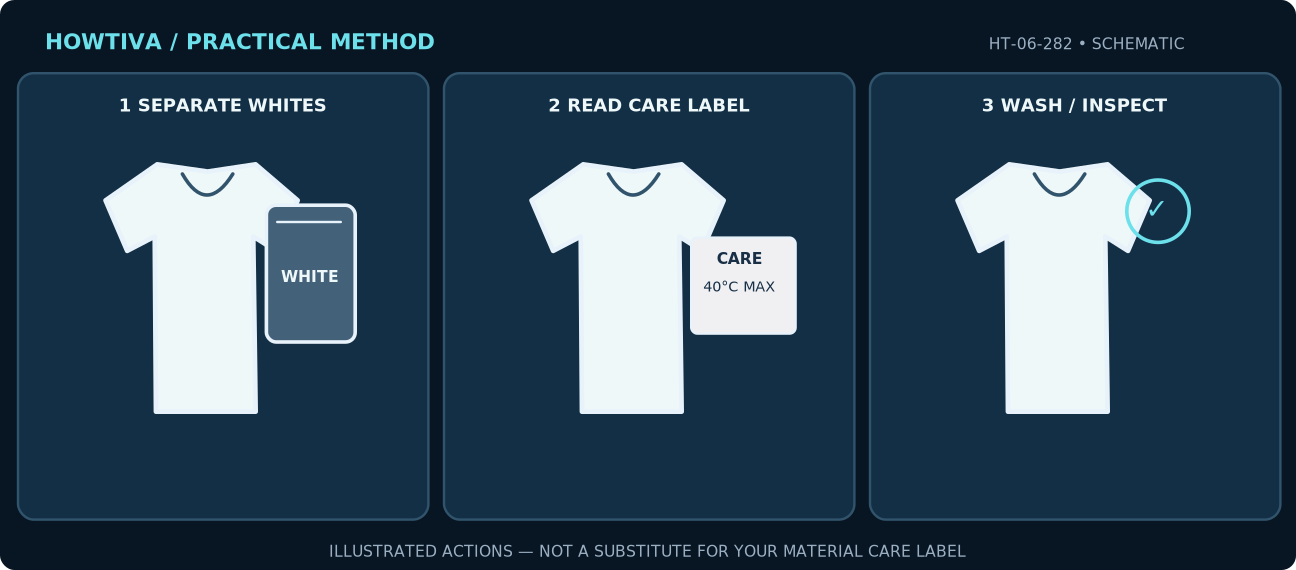
Separate plain whites from colored garments, read their individual care labels, pretreat spots with laundry detergent and wash using the warmest permitted temperature and the correct detergent dose.
Quick answer: Separate plain whites from colored garments, read their individual care labels, pretreat spots with laundry detergent and wash using the warmest permitted temperature and the correct detergent dose. Skip chlorine bleach entirely; detergent and good sorting are often enough.
For routine washable white garments, sheets and towels. A white shirt with colored embroidery is not equivalent to plain white cotton; white wool, silk, spandex-rich fabric, delicate lace and heavily finished items require gentler programs.
Before you begin: safety and materials
What you need:
- Care labels for every white garment
- Appropriate enzyme detergent where fabric-compatible
- Laundry hamper or sorting space
- Washer setting matched to the most delicate item
- Optional oxygen laundry booster only if the user wants a non-chlorine brightener and the care label allows bleaching
Step-by-step instructions
Step 1: Sort truly white items from prints and colors
Create a plain-white load first. Move white clothes with bright prints or colored embroidery into a compatible light-color group if the maker permits it. Separate new dark towels and jeans to reduce dye transfer; also keep lint-shedding terry cloth away from delicate smooth knits.
Step 2: Group by fabric weight and care instructions
Sort cotton towels apart from lightweight shirts and lace. Compare labels for water temperature, gentle-cycle requirements and tumble drying. A pale garment requiring cold delicate washing should not ride along with sturdy hot-wash towels simply because both are white.
Step 3: Pretreat visible marks with a fabric-safe product
Apply liquid laundry detergent or a labeled prewash product to collar, cuff or food spots. Color-test trims first. Follow the product’s stated contact time and avoid hot drying until stains disappear. If an old stain is set, repeated gentle treatment may be more appropriate than strong bleaching.
Step 4: Choose detergent and measure the correct amount
Use a quality detergent suited to washer type and fiber content. Follow washer, water-hardness and detergent-label guidance for dose; too little may leave soil while excess can deposit residue. Avoid stuffing the drum, which reduces effective rinsing and cleaning.
Step 5: Pick the warmest care-label-safe wash setting
Whirlpool notes warm or hot water can help remove many soils but also that delicate whites need lower temperatures. Choose the temperature and cycle allowed by the most restrictive garment in the load. Do not add chlorine bleach; an optional oxygen product is also a bleach and must pass label checks.
Step 6: Unload promptly and dry as allowed
Inspect damp whites for remaining marks before tumble drying. Rewash stained items if appropriate. Use line drying or machine drying within the garment label, protecting heat-sensitive elastane and trims. Clean lint traps and avoid over-drying to reduce wear and gray surface fuzz.
Practical examples: when the procedure changes
Plain white cotton towels
If the tag permits, a normal warm or hot wash with measured detergent may be suitable. Keep them separate from delicate white tops; towel lint and roughness can damage finer fabrics.
White activewear or underwear containing stretch fiber
Choose gentler temperatures and cycles to protect elastane and trims. Never assume bleach or a hot wash is safe just because the item is white.
Troubleshooting: what can go wrong
Whites look gray: Recheck sorting, detergent dosage, load size, washer rinsing and buildup from repeated mixed-color loads.
Small yellow patches persist: Pretreat by stain type and wash again if allowed, without heat drying before inspection.
Fabric feels stiff: Rinse appropriately and review detergent amount, fabric softener and mineral deposits.
A print on a white shirt bleeds: Stop, isolate the garment and follow label or specialist dye-transfer guidance rather than treating it as plain white.
Alternatives, materials and model differences
No whitening additive is required for everyday cleaning. If users specifically want a non-chlorine booster, check the GINETEX triangle and product instructions; oxygen bleach is still a bleaching agent, so exclude it when the label says “do not bleach.” Sunlight can affect some fabrics, prints or dyes, so use the recommended drying method.
Stop conditions and when to request qualified help
Stop if a garment shows color transfer, fiber weakening, unusual shrinkage or has a specialist-care label. Never introduce chlorine bleach or cleaning cocktails under the guise of a “natural” alternative.
Frequently asked questions
Is an oxygen booster the same as bleach-free laundry?
No. It is non-chlorine bleach; a strict bleach-free process uses only compatible detergent and water.
Should I always use hot water for white clothes?
No. Hot water is appropriate only when fabric and trims allow it; many stretch or delicate whites require cool washing.
Sources & further reading
-
Whirlpool: How to Wash White Clothes
-
GINETEX: Care Symbols
-
American Cleaning Institute: Laundry Basics
Use the checklists as you go, and confirm the result before moving on to a more involved repair.