How to Remove Oil Stains from Clothes
Gently blot away excess cooking oil, pretreat the stain with a fabric-compatible liquid laundry detergent or prewash remover, wash at the warmest temperature the care label allows, and inspect before using the dryer.
Quick answer: Gently blot away excess cooking oil, pretreat the stain with a fabric-compatible liquid laundry detergent or prewash remover, wash at the warmest temperature the care label allows, and inspect before using the dryer. Do not pour degreasers or flammable solvents onto clothes.
For routine food grease and oils on machine-washable garments. Motor oil, solvent-contaminated workwear, dry-clean-only clothing and fire-related contamination need separate risk management. Do not tumble dry fabric that still has a flammable oily residue.
Before you begin: safety and materials
What you need:
- Care label and clean absorbent towels
- Fabric-approved prewash stain remover or liquid laundry detergent
- Clean basin for a controlled test spot
- Washer and correct detergent dosage
- Air-drying rack for postwash inspection
Step-by-step instructions
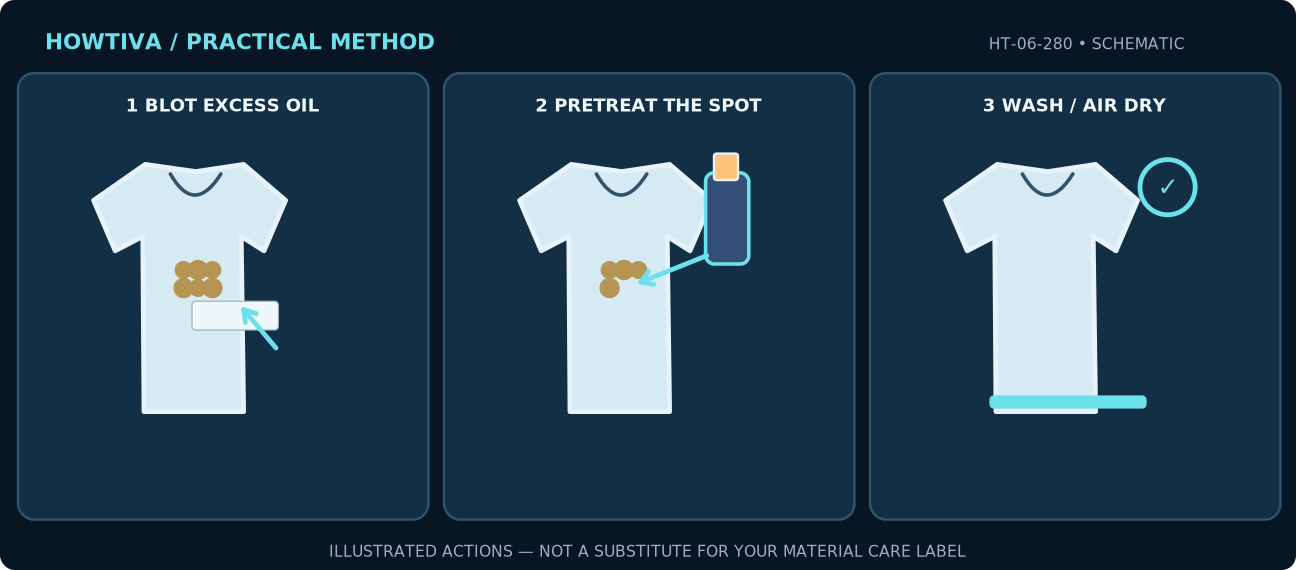
Step 1: Blot excess oil without rubbing it deeper
Place a clean towel beneath the garment and blot visible oil with a second towel. Avoid dragging a saturated cloth across the rest of the garment. If greasy solids remain, lift them carefully with a blunt tool, taking care not to snag the fibers.
Step 2: Decide whether the clothing is safely washable
Read the care label and identify the source of the oil. Household food grease is different from fuel, automotive solvent or unknown industrial chemicals; do not wash contaminated workwear using this casual method. Check print, embroidery and colorfastness on a hidden spot.
Step 3: Apply a compatible detergent pretreatment
Use a prewash stain remover or a little liquid laundry detergent on the targeted grease, following the product’s contact-time guidance. Gently work the liquid over the affected fibers without rough abrasion. Do not add an unsupported cocktail of cleaning agents.
Step 4: Keep treatment localized and rinse if directed
Place the oily zone over an absorbent towel so loosened grease does not spread onto a second layer. Follow the pretreatment label: some products go straight into the wash while others require rinsing. Treat heavy buildup gradually rather than saturating the fabric with a household degreaser.
Step 5: Launder at the warmest fabric-safe temperature
Select the most suitable permitted program, detergent and correct load size. The American Cleaning Institute recommends the warmest water the fabric tolerates for grease/oil stain laundering. That does not override low-temperature label restrictions on sportswear or delicate blends.
Step 6: Inspect before any heated drying
Remove the garment from the washer and inspect in good light. A semi-transparent oily shadow often shows after fabric dries; air dry safely to check. Repeat safe pretreatment if necessary. Never place oily or solvent-contaminated clothing into a dryer while unsafe residues remain.
Practical examples: when the procedure changes
Salad dressing on a cotton T-shirt
Blot promptly and pretreat the whole affected spot; dressing may also include colored spices or acidic ingredients. Address remaining colored marks with a product for those stains only after the oil treatment has been fully rinsed.
Cooking oil on a synthetic blend
Polyester may hold oily residues; do not assume hot water is safe. Use fabric-compatible pretreatment and care-label wash settings, with another pass if needed before drying.
Troubleshooting: what can go wrong
A dark patch is visible only when dry: It may indicate oil still in the fibers. Pretreat again and launder if compatible.
An oily odor remains: Avoid machine drying; rewash or seek advice on safe disposal if contamination is not ordinary food oil.
Colored fabric fades around the mark: Stop using the product and consult garment care guidance; compare the treatment against hidden-seam tests.
The detergent left a halo: Rinse and launder the entire piece to remove residue, rather than spot-overwetting one area.
Alternatives, materials and model differences
Fabric-safe prewash products can substitute for liquid laundry detergent. Avoid generic household solvent treatment, which may present fire, health and fabric risks. If the garment has labels requiring professional care, explain the oil source to the cleaner.
Stop conditions and when to request qualified help
Do not tumble dry garments contaminated with combustible oils, fuels, paint thinners or unknown solvents. Stop if skin irritation, dye transfer, bonded print damage or fabric shrinkage develops.
Frequently asked questions
Does hot water always work best?
No. Use only the warmest wash that is explicitly safe for the textile, its dyes and prints.
Can I use automotive degreaser on my shirt?
Not recommended. Use a fabric-labeled prewash product; industrial cleaners may harm skin or clothing and create safety hazards.
Sources & further reading
-
American Cleaning Institute: Stain Removal Guide
-
American Cleaning Institute: Laundry Basics
Use the checklists as you go, and confirm the result before moving on to a more involved repair.