How to Clean a Fabric Sofa Safely
Check the sofa’s upholstery care label before applying anything. Vacuum loose soil, blot fresh spills without rubbing, then use only the treatment allowed by the fabric code and the specific maker. Test in a hidden area and avoid soaking the cushion.
Quick answer: Check the sofa’s upholstery care label before applying anything. Vacuum loose soil, blot fresh spills without rubbing, then use only the treatment allowed by the fabric code and the specific maker. Test in a hidden area and avoid soaking the cushion.
Who this is for: Routine dust, minor fresh spills and a fabric whose care instructions are available. Do not treat leather, solvent-only upholstery, vintage dyes or suspected biological contamination with a generic water-and-soap recipe.
Before you begin: materials and safety
Gather the following:
- Upholstery care label or model manual
- Vacuum upholstery attachment and soft clean white cloths
- Fabric-compatible cleaning product only when the code permits it
- Dry absorbent towels and a ventilated area without heaters
Step-by-step instructions
Step 1: Identify the care code before choosing a liquid
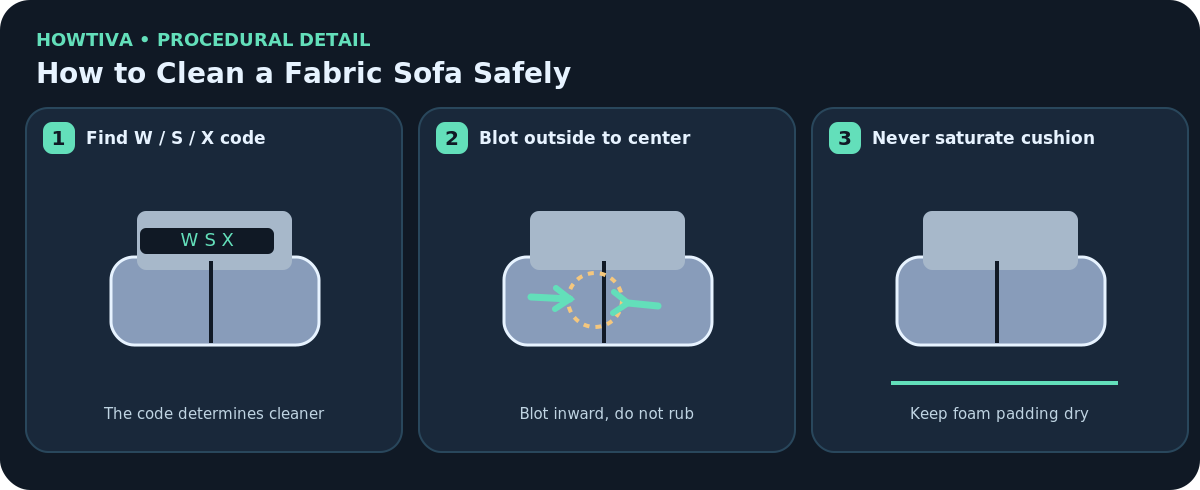
Find the tag beneath the sofa or under a cushion. Code W typically permits a suitable water-based upholstery cleaner; S calls for manufacturer-approved solvent methods; W/S permits either as directed; X generally means vacuum or brush only. Manufacturer instructions override generic code summaries.
Step 2: Check colorfastness and loose areas
Inspect arms, seams, trim and cushioned panels for cracks, fading, stains already treated or weakened fibers. Test an approved cleaner on a discreet patch and let it dry fully before treating a visible stain. Avoid spot-cleaning delicate or unknown finishes.
Step 3: Remove dry soil gently
Vacuum the seat, back and crevices with an attachment appropriate for the texture. Dust and crumbs become muddy when wetted, so remove them first. If the upholstery is napped, move with the direction of the pile to reduce marks.
Step 4: Blot a spill before it spreads
Use a clean white towel and lift liquid from the edge toward the middle rather than wiping it into a ring. Replace saturated towel sections promptly. Never press the liquid down into the padding. If spill contains unknown chemicals or bodily fluids, do not improvise a household cleaner.
Step 5: Apply the right cleaner to a small area
For W-coded fabric only, use a label-approved water-based upholstery foam or shampoo on a cloth, not a wet pour over the cushion. S or X labels are not permission for soapy water. Follow the product contact time and remove residue as directed; avoid direct heat or excessive steam.
Step 6: Dry thoroughly and inspect for rings
Blot residual moisture and ventilate until the sofa and inner surfaces feel dry. Do not sit on a damp cushion or put fitted covers back prematurely. Inspect in even light; a ring may mean cleaning solution traveled beyond the treated patch, not that stronger chemistry is needed.
Step 7: Record the method for future spills
Keep a photo of the care tag, product name and results. Use coasters, washable throws or house rules to reduce future spills, but do not apply fabric protector without maker approval.
Two real-world situations where the method changes
Water-based stain on a code W chair
Spot-test the approved water-based upholstery product, blot from outer edge to center and avoid saturation.
Unknown inherited sofa with no tag
Restrict to dry surface dusting and vacuuming until the material and care requirements can be established.
Troubleshooting: if the result is not right
A faint water ring appears: Stop adding water; let the fabric dry and consult a professional for a whole-panel or manufacturer-approved treatment.
Color lifts onto the towel: Stop immediately: test failed and cleaning may damage dye.
The cushion remains wet inside: Do not use it; ventilate and arrange specialist treatment if drying is incomplete.
Foam cleaner leaves crusty residue: Do not keep soaking; seek guidance on residue removal for that cleaning code.
Alternatives and manufacturer differences
- Removable covers may be washed only where the sofa maker explicitly permits, even if they have zippers.
- Code S fabrics are best left to trained cleaners when a safe solvent procedure is not specified.
- Steam and hot-water extraction are not universal fabric-sofa cleaning methods.
When to stop and ask a professional
Stop for code X or S without suitable professional support, color loss, water-sensitive finishing, damp padding, mould or extensive contamination.
Final checks and prevention
Confirm the surface and padding are dry before regular use. Photograph the care code for later so a future spill does not require guesswork.
Frequently asked questions
How do I know when to stop?
Stop for code X or S without suitable professional support, color loss, water-sensitive finishing, damp padding, mould or extensive contamination. A clean appearance alone does not prove that contaminated food, persistent water ingress, damaged fabric or faulty equipment is safe.
Sources & Further Reading
- La-Z-Boy — Fabric & Leather Care (Upholstery codes, pretesting and no saturation.)
- IKEA — Cleaning Upholstery Guide (Regular vacuuming, limited moisture and fabric-specific treatment.)
Use the checklists as you go, and confirm the result before moving on to a more involved repair.