How to Clean a Toilet Bowl Safely
Ventilate the bathroom, put on suitable gloves and use one toilet-bowl cleaning product approved for your toilet finish.
Quick answer: Ventilate the bathroom, put on suitable gloves and use one toilet-bowl cleaning product approved for your toilet finish. Apply it inside the bowl as the label directs, keep the surface wet for the instructed contact time, scrub with a compatible toilet brush, then flush and rinse. Never combine cleaners—especially bleach with acids or ammonia—and protect electronic bidet attachments from splashes.
For routine residential porcelain toilet-bowl soil, not unclogging, sewage overflow or repairing cracked china. Enamel-like coatings, black or colored finishes, smart toilets, washlets and electronic seats have different product restrictions. This is cleaning, not guaranteed disinfection unless a registered disinfectant label is followed.
Before you begin: safety and materials
What you need:
- Approved nonabrasive toilet bowl cleaning solution with readable safety label
- Soft compatible toilet brush or sponge brush for special bowls
- Protective gloves, ventilation, optional eyewear if label requires
- Separate clean damp cloth for external surfaces and hand soap
Step-by-step instructions
Step 1: Check for health, plumbing and electrical hazards
Do not clean a bowl overflowing with sewage, heavily cracked porcelain or water leaking at the base. If a bidet seat is installed, follow its cleaning/power guidance and keep product out of electric connectors and water-control openings.
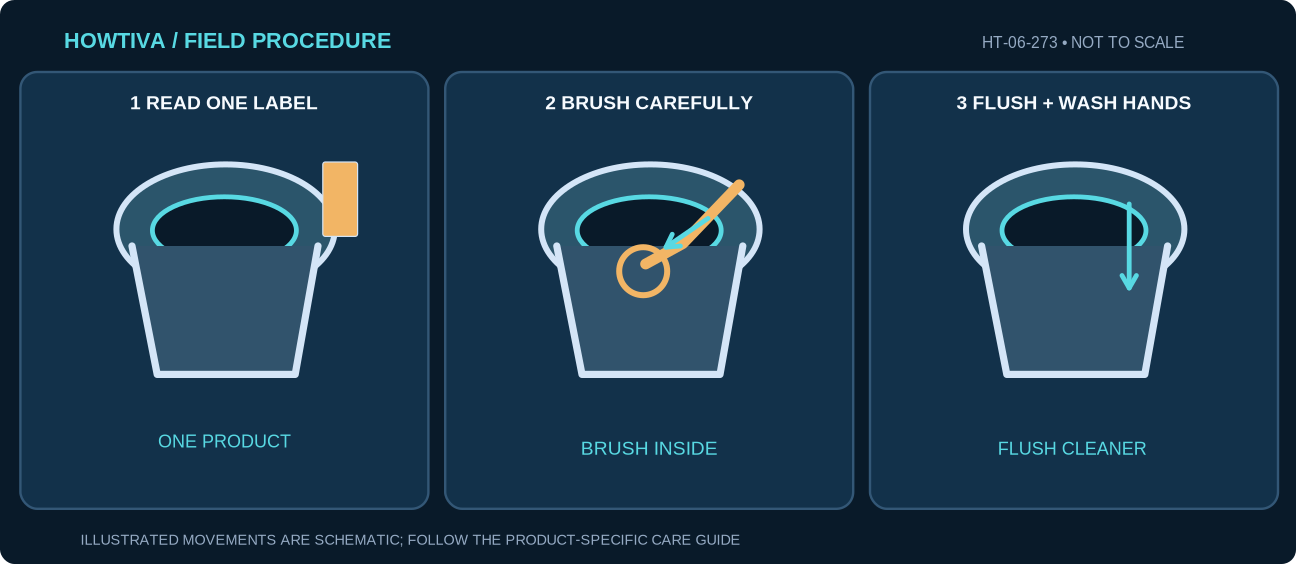
Step 2: Remove bathroom clutter and read one label
Open a window or start exhaust ventilation if available. Put cleaning tools out of children’s reach. Check toilet maker restrictions: certain Kohler surface guides favor a sponge brush and exclude abrasive materials and harsh bleach/chlorine products.
Step 3: Apply approved cleaner inside the bowl only
Carefully direct a compatible bowl cleaner to the inner porcelain as its label shows; do not mix it with a previous detergent, bleach tablet or drain product. If the bowl contains an unknown product already, do not add a second chemical. Consult its container or appropriate local poison advice if fumes arise.
Step 4: Respect contact time without improvising ratios
If disinfecting is intended, CDC says the surface must remain wet for the label contact time. Do not confuse ordinary cleaning with disinfection; extra concentration or hours of soaking may damage finishes and seals rather than improve hygiene.
Step 5: Scrub with a finish-safe brush and flush
Brush the accessible inner bowl, under-rim area only where safe and permitted, and waterline. Avoid wire brushes or aggressive pumice on unknown coatings. Flush with the lid closed if practical to reduce droplets, and rinse the brush according to its care instructions.
Step 6: Clean touchpoints separately and finish hygienically
Use a separate damp cloth for seat, flush control and exterior surfaces and the manufacturer-approved mild cleaner. Avoid splashing any bidet electronics. Store chemicals securely and wash hands with soap and water for at least 20 seconds.
Practical examples: when the procedure changes
Mineral ring remains at the waterline
It may be hard-water buildup rather than active dirt. Choose a bowl-specific product only if the toilet finish maker permits it; never mix acidic descaler with an existing bleach-based product.
A toilet with a bidet attachment needs cleaning
Seat electronics and coated fittings often prohibit ordinary bowl cleaner contact. Separate the parts and follow the complete fixture’s instructions, including power precautions.
Troubleshooting: what can go wrong
Cleaner foams unexpectedly or fumes increase: Leave the area and follow poison/emergency instructions; do not add water or another chemical without professional guidance.
Stains persist after one safe pass: Let it dry and identify whether the mark is mineral, dye, abrasion or a crack before repeating.
Brush scratches the finish: Stop using abrasive tools; seek approved replacement brushes rather than stronger scrubbing.
Water seeps at the toilet base: Cleaning will not resolve failed seals or cracked porcelain—arrange plumbing service.
Alternatives, materials and model differences
Routine soil often needs only soap-and-water cleaning on appropriate exterior surfaces; CDC notes that disinfecting every household surface is generally unnecessary unless someone is sick. If disinfection is indicated, choose a product registered for the actual surface and follow its label, contact time and ventilation.
Stop conditions and when to request qualified help
Stop if there are sewage leaks, cracked china, unsafe wiring, strong chemical fumes or an unknown previous cleaner in the bowl. Never mix bleach, acidic toilet cleaner, ammonia or descaler in the bowl or cistern.
Frequently asked questions
Can I mix two toilet cleaners to remove hard stains?
No. ACI and CDC explicitly warn not to mix household cleaning/disinfection products.
Should I disinfect after every ordinary cleaning?
CDC says routine soap-and-water cleaning often suffices; disinfect when indicated by illness and follow a suitable product label.
Sources & further reading
-
American Cleaning Institute: Home Cleaning Problems and Solutions
-
Kohler: Special Surfaces Care and Clean
Use the checklists as you go, and confirm the result before moving on to a more involved repair.