How to Fix a Wobbly Chair
Stop using the chair until you know why it wobbles. On a level floor, check whether the problem is uneven feet, loose accessible fasteners or a failing wood joint.
Quick answer: Stop using the chair until you know why it wobbles. On a level floor, check whether the problem is uneven feet, loose accessible fasteners or a failing wood joint. Hand-tighten sound manufacturer-approved fasteners; use matched floor protectors only for minor floor contact issues. For split, cracked or moving structural chair joints, take the chair out of service and seek competent furniture repair.
A cosmetic wobble is not always an innocent level problem. These steps are for ordinary stationary household chairs in otherwise sound condition. Avoid DIY repair of office chair gas cylinders, powered recliners, antique collectible chairs, folding mechanisms, child seating, or load-bearing cracked frames.
Before you begin: safety and materials
What you need:
- Level, flat floor and bright light
- Matching hand screwdriver or hex key only for known fasteners
- Soft pad or helper to protect chair while inspecting
- Manufacturer instructions and correctly rated replacement glides if needed
Step-by-step instructions
Step 1: Remove the chair from service and choose a level test floor
Place the chair on a known level, firm surface away from carpets, rugs and uneven tiles. Do not sit on or rock it while inspecting. Note which legs contact the floor and whether the seat or frame flexes under gentle hand pressure.
Step 2: Look for damage before adjusting anything
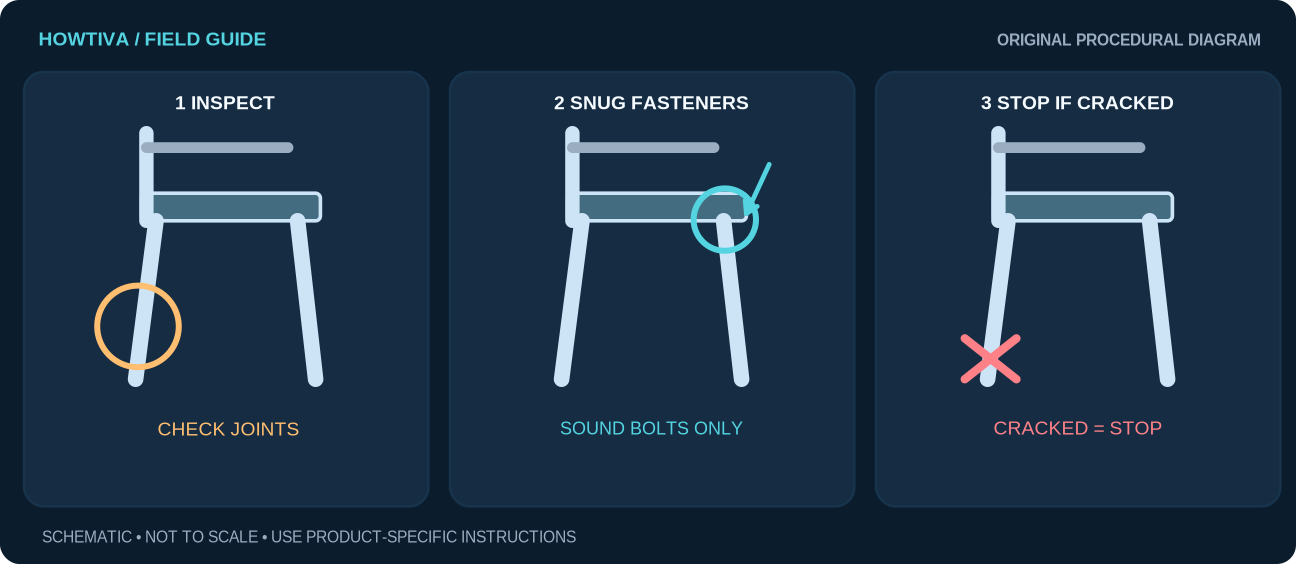
Check each leg, stretcher, back joint, seat bracket and bolt or screw location. A split around a dowel or mortise, loose brace, bent metal leg or crack in plastic is a structural warning. Photograph any movement for a repair professional.
Step 3: Separate floor-contact problems from joint movement
Apply light hand pressure to each seat corner while observing the feet; do not load with body weight. If one foot is shorter but the joints do not move, the issue may be a missing or uneven glide. If legs spread relative to the seat, the joints need repair rather than a pad under one leg.
Step 4: Tighten only accessible sound mechanical fasteners
For chairs assembled with bolts or screws, use the manufacturer-specified wrench or driver to snug loose fasteners evenly. Do not drill new holes in thin wood or overtighten bolts into damaged inserts. Replace missing specified hardware only with an exact safe match.
Step 5: Assess whether a wood-joint repair requires a specialist
WOOD Magazine recommends separating loose joints, removing failing old glue, restoring a snug fit and re-gluing—not merely squeezing fresh glue into an unstable gap. That is skilled joinery. If a glued leg or stretcher moves, stop use and seek qualified repair rather than presenting a surface dab as sufficient.
Step 6: Test only after proper repairs and cure
If a competent repair was undertaken, respect the adhesive maker’s clamp and cure guidance. Titebond generally advises not stressing many newly glued joints for at least 24 hours. Verify stability on a level floor before ordinary use; do not test by violent rocking.
Practical examples: how the steps change
Flat-pack dining chair rocks immediately after assembly
Confirm every correct bolt and insert is present, read the tightening sequence, and check on a flat surface. A missing pad or unseated leg can mimic a broken chair; photograph faulty parts and contact the maker under warranty.
Old wood dining chair creaks when somebody sits
A loose stretcher-to-leg joint can fail under load. Do not simply squeeze superglue into the visible seam and return it to service; the interface may contain old glue and no longer fit.
Troubleshooting the problems people actually encounter
Still wobbles after tightening: Inspect for hidden splitting, mismatched assembly parts or an uneven floor; repeated retightening is not a cure.
One foot seems shorter: Check for a missing glide first. Use a maker-approved stable replacement, not an improvised stack that can slide.
Screws spin in wood: The substrate is damaged. Stop; larger screws or glue may not be structurally appropriate.
Plastic seat shell is cracked: Retire the chair or obtain OEM service. Adhesive patching may not restore occupant safety.
Alternatives, product differences and limitations
Furniture restoration workshops can rebuild dowel, mortise-and-tenon or corner-block joints correctly. If the chair is inexpensive but structurally compromised, replacement is safer than a cosmetic repair. Do not apply wood glue to unknown plastic or metal joints.
When to stop and seek qualified help
A loose seat, detached back, split leg, bending metal, cracking sound or failed folding lock is a stop condition. Never invite anyone to sit on a structurally uncertain chair.
Frequently asked questions
Can I glue a loose chair leg without dismantling it?
Professional woodworking guidance emphasizes clean, tight mating joints and appropriate clamping. A surface bead of glue usually does not re-create that joint.
Would furniture pads fix the wobble?
Only if the frame is solid and the issue is a small floor-contact difference. Pads are not structural repairs.
Sources & further reading
-
WOOD Magazine: A plane repair for a wobbly chair
-
Titebond: Wood Glue FAQs and Application Advice
Use the checklists as you go, and confirm the result before moving on to a more involved repair.