How to Protect Furniture from Scratching Floors
Identify both the flooring material and the furniture foot. Remove grit, lift rather than drag the furniture, then fit floor-compatible felt pads or protective cups that cover each contact point.
Quick answer: Identify both the flooring material and the furniture foot. Remove grit, lift rather than drag the furniture, then fit floor-compatible felt pads or protective cups that cover each contact point. Put the furniture down squarely and inspect pads for wear or trapped particles. Hard floors usually benefit from felt; gripping feet may be more suitable when preventing sliding matters most.
This guide covers intact tables, chairs and similar freestanding furniture. For pianos, safes, large cabinets, beds with unusual casters, rolling office chairs and heated or soft floors, consult specific floor and furniture ratings. A soft pad does not make an unstable chair safe.
Before you begin: safety and materials
What you need:
- Flooring care guide for hardwood, laminate, vinyl or tile
- Soft clean cloth and manufacturer-approved mild cleaner
- Self-stick felt pad, felt cup, rubber grip or caster mat chosen for the use
- Scissors only if pad product is intended to be trimmed; a helper for lifting
Step-by-step instructions
Step 1: Identify each source of contact
Inspect feet, caps, caster wheels and the floor around the object. A chair may have round legs while a console has a broad plinth. Look for exposed screw heads, broken plastic glides and embedded grit—these can scratch through new pads.
Step 2: Match the protector to the actual surface and movement
For chairs sliding on hard finished floors, 3M markets felt pads that cushion contact; choose size and shape to cover the full bearing surface. For furniture that should not move, select suitable gripping pads rather than assuming slippery felt is desirable.
Step 3: Lift furniture safely and clean contact points
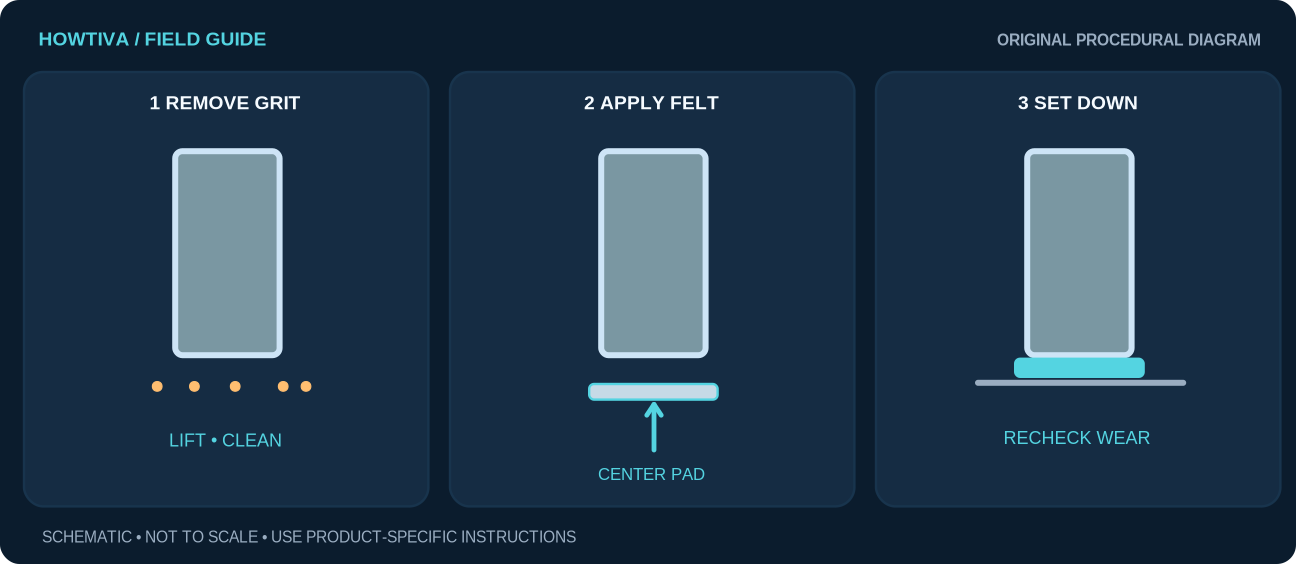
Use help for heavy items; do not flip furniture so precariously that it can fall. Remove loose sand from the floor and clean the leg contact surfaces. Let them dry fully per pad adhesive instructions before attaching anything.
Step 4: Place each pad flat beneath a sound foot
Peel backing and press the pad centered on the foot, keeping adhesive away from finished sides. For round legs, use matching circular felt; broad legs may require cup-style protectors or custom-cut products. Do not cover a cracked or loose leg to disguise damage.
Step 5: Set the item down and verify its balance
Lower the furniture rather than dragging it into place. Check that all feet touch and the item does not rock or slide dangerously. Inspect pads for peel-back, protruding grit or edges that catch flooring seams.
Step 6: Build a maintenance habit
Replace flattened, dirty or detached pads before the leg rubs the floor. Sweep up grit under dining chairs and lift furniture to rearrange it. Quick-Step parquet care guidance advises lifting furniture instead of dragging and using felt protectors.
Practical examples: how the steps change
Dining chairs on engineered wood
Their feet move every day. Fit appropriate pads to all legs, inspect more frequently than a stationary bookcase, and clear sand brought in on shoes.
Dining table slides too easily after felt fitting
Soft felt reduces friction as well as scuffs. If stability is the primary need, check manufacturer-approved non-marring grip cups; do not wedge loose rubber scraps beneath a heavy table.
Troubleshooting the problems people actually encounter
Pad falls off after a week: A dirty, textured, moist or very small contact area reduces adhesion. Switch to a suitable cup or fitted glide and follow its application directions.
Scratches continue despite pads: Check grit trapped within felt, exposed bolts, damaged casters and other objects in the room; felt is not abrasion-proof.
Marks appear on vinyl: Confirm protector material is compatible with that floor. Some rubber compounds can stain resilient flooring.
Chair feels unstable: Remove the pad and inspect structure, foot sizes and equal heights. Do not solve a structural wobble with extra layers.
Alternatives, product differences and limitations
Use wide protective cups, product-approved sliders or rolling chair mats where appropriate. A caster wheel labeled “soft” still needs compatibility verification with the flooring maker. If the item is heavy or valuable, plan a lift with adequate help, not a solo dragging job.
When to stop and seek qualified help
Stop if the furniture has a weak leg, the floor finish peels, an adhesive discolors the finish or the object cannot be lifted safely. Consult flooring/furniture manufacturers for warranty or special surface requirements.
Frequently asked questions
Are felt pads always better than rubber?
No. Felt eases movement; suitable grip materials may help stop movement. Choose based on floor finish, furniture and intended behavior.
Do pads need replacing?
Yes. Inspect after moves and cleanings; replace when worn, compressed, dirty or detached.
Sources & further reading
-
3M Scotch: Self-Stick Felt Pads, Brown, Round
-
3M Scotch: Brand Surface Protection
Use the checklists as you go, and confirm the result before moving on to a more involved repair.