How to Remove Soap Scum from Bathroom Tile
First identify whether the shower surface is ceramic/porcelain or natural stone. Remove loose grit, apply a pH-compatible mild or purpose-made cleaner, loosen soap film with a soft cloth or non-scratch brush, rinse thoroughly and dry.
Quick answer: First identify whether the shower surface is ceramic/porcelain or natural stone. Remove loose grit, apply a pH-compatible mild or purpose-made cleaner, loosen soap film with a soft cloth or non-scratch brush, rinse thoroughly and dry. On marble, travertine or limestone, avoid vinegar, citrus, acidic toilet-bowl cleaners and harsh scrubs that can etch or dull the stone.
For ordinary bathroom walls and floors with sound grout and waterproofing. Does not cover mold inside backing material, missing grout, leaking shower membranes or restoration of acid-etched stone. Some polished porcelain or specialty coatings require much gentler products than basic glazed ceramic.
Before you begin: safety and materials
What you need:
- Manufacturer-approved tile or stone cleaner and its mixing directions
- Soft microfiber cloth or nonabrasive sponge; soft-bristle brush if allowed
- Fresh clean water, two cloths and an absorbent drying towel
- Gloves as required by label, ventilation and non-slip footing
Step-by-step instructions
Step 1: Identify tile material and the type of residue
Look at packaging, installer notes or a hidden tile sample. White streaks may be dried soap, mineral deposits or grout haze; black patches could be mold rather than soap scum. Natural stone and cement grout have different chemical tolerances from glazed porcelain.
Step 2: Make the surface slip-safe and remove loose debris
Ventilate the room; move bath products out of the way. Rinse or gently wipe away hair and sand before friction cleaning. Wear slip-resistant footwear and do not stand in a soapy shower tray with wet tools.
Step 3: Select a compatible cleaner and test a small spot
Daltile recommends cleaner selection for the tile and grout system, following label dilution and dwell time. For natural stone use a neutral stone-safe cleaner or explicitly non-acidic soap-scum remover. Avoid acidic home mixtures on cementitious grout and calcium-based stone.
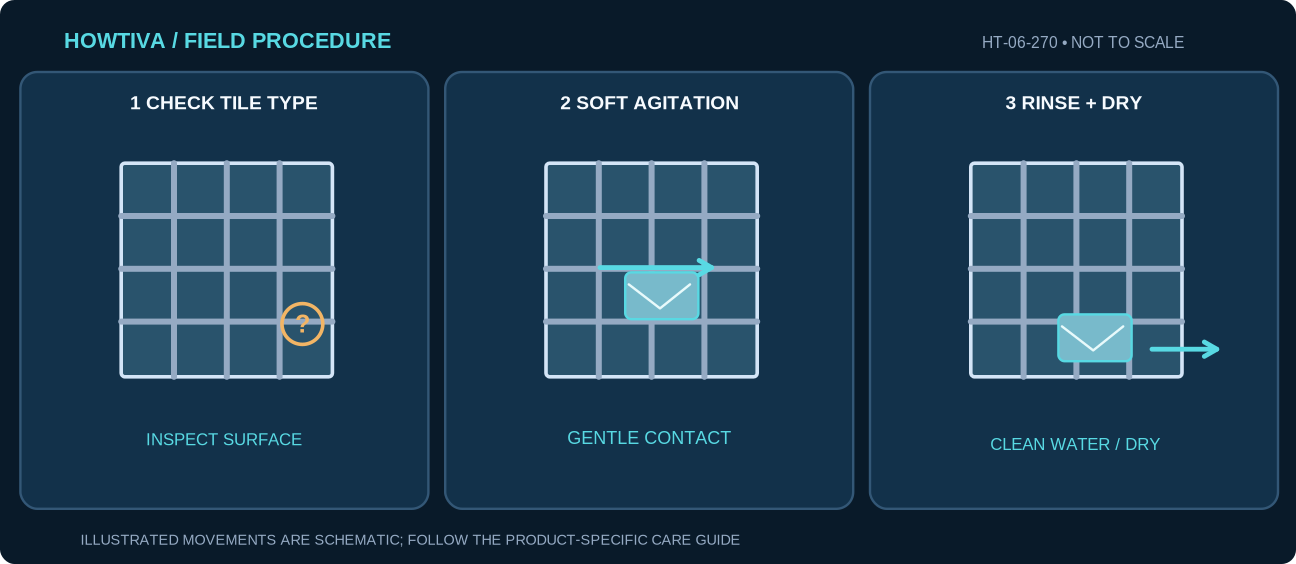
Step 4: Work in small sections with light agitation
Apply the approved product to a cloth or tile area as directed; allow only the label-specified contact period. Wipe in controlled overlapping strokes, using a soft brush where safe. Do not grind grit under a scouring pad or scour grout out of a joint.
Step 5: Rinse film and cleaner away fully
Use fresh clean water and remove all foam; Daltile warns residue can reduce slip resistance on floors. Rinse neighboring metal fittings quickly if overspray reaches them. Do not combine a second bathroom product with the first before thorough rinsing.
Step 6: Dry and reduce future buildup
Squeegee compatible wall tiles, wipe borders dry and run the bathroom ventilation system. Repair drips or moisture problems rather than relying on stronger soap-scum sprays. Reassess if a cloudy patch is permanent etching, grout damage or an inaccessible moisture issue.
Practical examples: when the procedure changes
White soap film on glossy ceramic wall tile
Begin with a mild approved cleaner and soft sponge, rinse and dry; use stronger tile-specific products only with instructions that explicitly allow the grout type.
Soap haze on polished marble shower walls
Use a neutral natural-stone product or explicitly non-acidic soap-scum remover. A vinegar soak can dissolve and etch calcium-based stone.
Troubleshooting: what can go wrong
Floor still feels slick after scrubbing: Rinse again with fresh clean water until detergent is gone; stop before the floor becomes a slip hazard.
A white patch stays after drying: It may be mineral scale or etching, not soap. Identify material before selecting any deposit remover.
Grout loses color while brushing: Stop immediately; the cleaner or abrasion may be too aggressive for cement grout or pigmentation.
New dark blotches appear in joints: Evaluate possible mold, moisture intrusion or sealant failure separately from routine soap scum.
Alternatives, materials and model differences
On sealed porcelain, a manufacturer-specified tile-and-grout cleaner may remove heavier buildup. On calcium-rich stone, a stone specialist or approved non-acidic product is preferable. Daltile recommends fresh-water rinse and drying to avoid residues on many surfaces.
Stop conditions and when to request qualified help
Stop for water penetrating behind tiles, widespread growth, crumbling grout, cracked stone, damage to adjacent metal finishes or any temptation to combine drain cleaner, bleach and acidic scale remover.
Frequently asked questions
Will vinegar remove soap scum from every tile?
No. Vinegar can etch natural stone and can damage cementitious grout; verify the surface and product compatibility first.
Why is my shower slippery after cleaning?
Cleaner residue can remain even after soap scum lifts. Rinse with clean water and dry carefully.
Sources & further reading
-
Natural Stone Institute: Care & Cleaning of Natural Stone
-
Tile Council of North America: Cleaning Grout
Use the checklists as you go, and confirm the result before moving on to a more involved repair.