How to Clean a Range Hood Filter
Turn the hood fan and light off and wait for hot cooking surfaces to cool.
Quick answer: Turn the hood fan and light off and wait for hot cooking surfaces to cool. Identify the filter: washable metal grease filters usually release by a model-specific latch and can be washed with mild detergent, rinsed and fully dried; non-ducted charcoal filters generally must be replaced, not washed. Reinstall the metal filter securely before operating the hood.
For accessible domestic range hood grease filters, not electrical fan housings, duct cleaning, motors, or commercial restaurant systems. Mesh, baffle and hybrid assemblies may use retaining clips, push buttons, handle tabs or hinged catches. Never assume a filter that looks metallic is dishwasher-safe.
Before you begin: safety and materials
What you need:
- Exact hood model and filter diagram/manual
- Sink with mild dishwashing liquid and warm water
- Soft nylon brush or cloth, suitable basin and drying rack
- Towel beneath the removal location to catch drips and help support the filter
- Replacement activated carbon filter only when indicated
Step-by-step instructions
Step 1: Turn the hood off and identify its filter type
Ensure fan and task light are off and the range is cool. Look for an aluminum mesh panel, stainless baffle unit or activated-charcoal pad behind a grease screen. Broan-NuTone specifically distinguishes cleanable metal grease filters from carbon filters that cannot be washed.
Step 2: Find the correct release without bending the frame
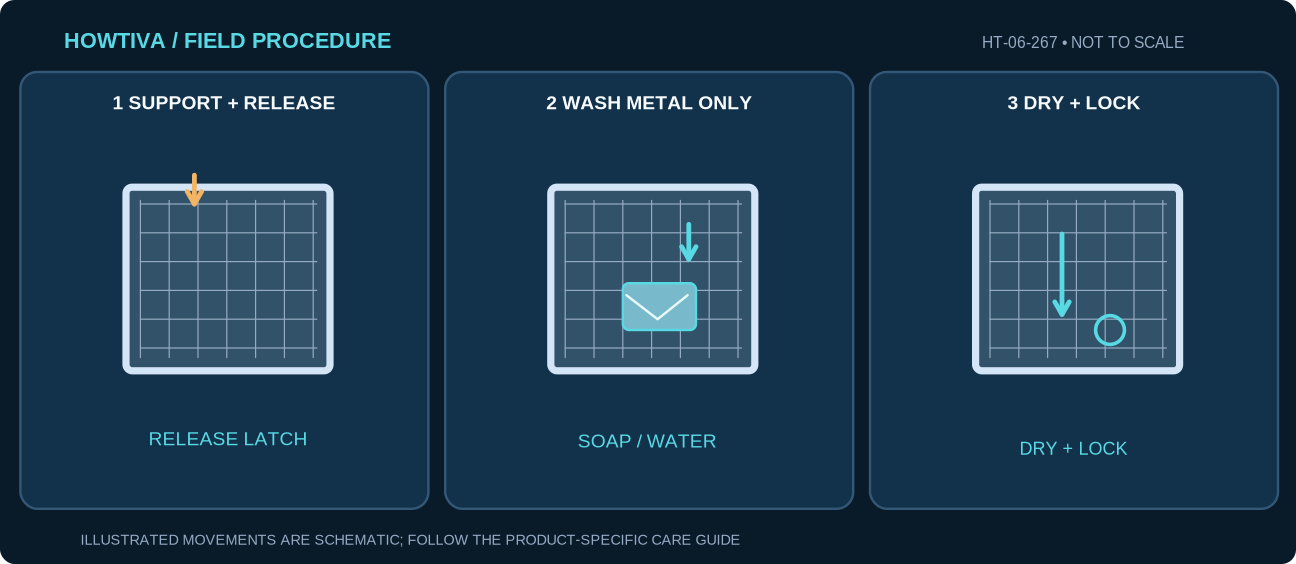
Support the filter with one hand. Use its specific push tab, flip latch, finger well or handle release; the Broan help page illustrates multiple mechanisms. Some tilt down at the front before unhooking the rear, while others slide. Stop if it remains captive.
Step 3: Set aside any separate charcoal section
If there is a non-ducted charcoal cartridge, consult its replacement part number and schedule rather than immersing it. Do not attempt to revive saturated carbon with boiling water, oven heat or chemical degreasers.
Step 4: Soak and gently wash an approved metal grease filter
Use warm, not scalding, soapy water and a soft brush to work through the accessible mesh or baffle channels. Avoid crushing mesh and abrading anodized coatings. If the model permits dishwashing, use its specified detergent; Broan warns certain detergents can discolor aluminum.
Step 5: Rinse through channels and dry completely
Rinse loose grease and detergent until the water runs clean. Drain and air-dry fully. Do not reinstall a dripping panel above powered wiring, and do not shake oil onto electrical controls or stovetop burners.
Step 6: Refit firmly and verify capture
Engage the rear hooks or guides as specified and let the original latch secure the front. Gently test retention with the unit switched off. Replace any damaged frame or missing latch before operation; verify that airflow path is open and no filter rattles.
Practical examples: when the procedure changes
A non-ducted hood has both a metal screen and charcoal pad
The screen is often washable, but carbon is not. Identify separate layers and replace charcoal only with compatible parts.
An aluminum panel turns dark after dishwashing
Broan notes that detergent or water chemistry can cause discoloration without necessarily reducing filter performance. Prevent recurrence with mild handwashing if recommended.
Troubleshooting: what can go wrong
Filter will not release: Use the exact hood model diagram; forcing a latch can bend the retention tab and create a falling-filter hazard.
Grease remains between baffles: Clean permitted surfaces again with a soft brush; if the unit is a sealed cartridge consult service.
Filter is still damp after rinsing: Wait for complete drying; never use flame, oven or a heat gun to speed it up.
Odor continues although metal is clean: Check for an exhausted carbon filter, grease in inaccessible ducting or airflow faults; arrange safe service as needed.
Alternatives, materials and model differences
For removable stainless baffles, a manufacturer may allow dishwashing or hand cleaning; the chosen method depends on finish and model. On ductless systems, the carbon pad is typically a replacement consumable, not an alternative soaking step. Follow the owner manual for maintenance frequency based on grease load.
Stop conditions and when to request qualified help
Stop if a filter is seized beside exposed wiring, grease is dripping into a light/motor enclosure, the fan sparks, a bracket breaks or a heavy unit cannot be supported. Never run a filterless hood as an improvised test where the manual requires a filter.
Frequently asked questions
Can charcoal filters go in the dishwasher?
Broan says its non-ducted carbon filters must be replaced, not washed. Verify the exact replacement type.
How often should I clean a metal mesh filter?
Broan suggests approximately monthly for typical use, with more frequent cleaning for heavy frying; adjust to the manufacturer and real buildup.
Sources & further reading
-
Broan-NuTone: How often should I clean my filters?
-
Broan-NuTone: How do I remove or install my Grease Filter?
Use the checklists as you go, and confirm the result before moving on to a more involved repair.