How to Clean a Ceiling FanWithout Spreading Dust
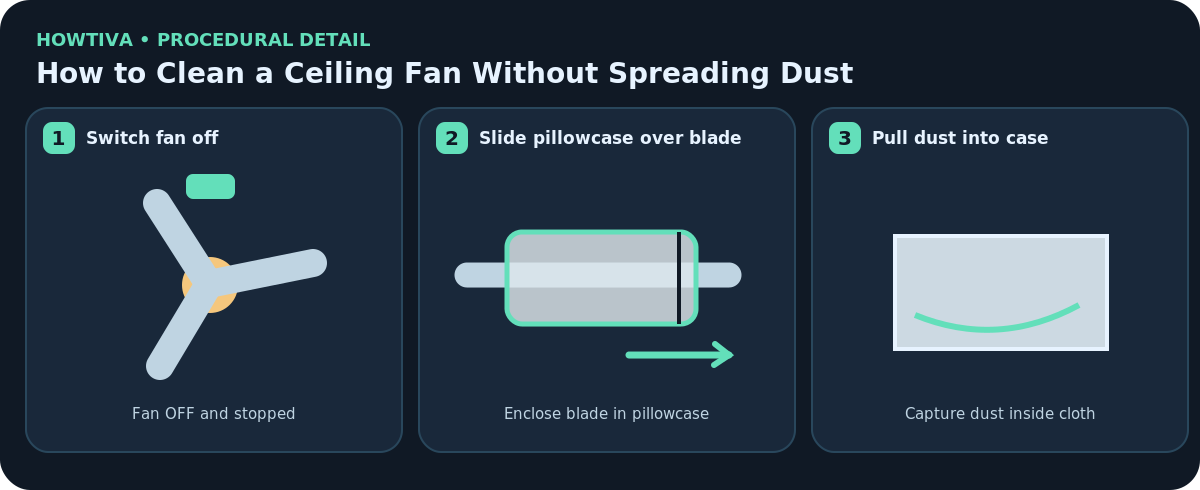
Turn off the ceiling fan and wait for the blades and light to stop and cool. Slide a large pillowcase over one blade, press lightly and pull it back so dust stays inside the fabric. Repeat for each blade, then wipe the outside of the housing with a soft cloth.
Quick answer: Turn off the ceiling fan and wait for the blades and light to stop and cool. Slide a large pillowcase over one blade, press lightly and pull it back so dust stays inside the fabric. Repeat for each blade, then wipe the outside of the housing with a soft cloth.
Who this is for: Routine reachable ceiling-fan surface dusting only. It does not cover internal electrical work, fan balance repairs or cleaning fixtures mounted over stairs or at unsafe height.
Before you begin: materials and safety
Gather the following:
- Clean old pillowcase large enough for a blade
- Microfiber cloth and optional long-reach fan duster
- Floor sheet to catch stray dirt
- Stable approved access equipment only if essential and safe
Step-by-step instructions
Step 1: Stop the fan and isolate accidental operation
Switch off the fan and any attached light, wait until every blade stops and bulbs cool, then prevent another person from activating it. If the unit uses a remote, secure it. If touching the housing or light fixture would expose wiring, do not proceed.
Step 2: Choose safe access before reaching up
Use an extendable soft duster from the floor where possible. Never stand on rolling chairs, countertops or unstable furniture. If the blades cannot be reached safely without risky ladder work, arrange a qualified cleaning service.
Step 3: Place a protective sheet below the fan
Move fragile items from beneath the fan and put a washable sheet over nearby furniture. A pillowcase collects much of the dust but is not perfect; some particles will escape while moving between blades.
Step 4: Enclose one blade in the pillowcase
Open the pillowcase and slide it over the stopped blade from the tip toward the hub as far as comfortable, without forcing it over a bracket. Support the blade with minimal pressure. Do not bend or pull the blade while its mounting hardware supports it.
Step 5: Pull the case outward to trap dust
Close the fabric lightly against the top and bottom surfaces and slide it toward the tip, collecting dust inside. Do not snap or shake the dust in the room. Repeat with a cleaner section of cloth for every blade until the loose layer is gone.
Step 6: Finish the blade and housing safely
Where the finish allows it, use a slightly damp cloth for remaining sticky grime, then dry. Apply cleaner to the cloth and never spray the motor, switches or light housing directly. Do not remove electrical covers or fan blades for ordinary dusting.
Step 7: Dispose of dust and verify smooth operation
Turn the pillowcase inward over a trash can or take it outdoors before washing according to the fabric care label. Restore fan power only after every accessible surface is dry. A new wobble, unusual sound or loose blade needs inspection rather than further cleaning.
Two real-world situations where the method changes
Bedroom ceiling fan with powdery dust
A dry pillowcase pass may collect the entire visible dust layer without dripping onto bedding.
Kitchen fan with sticky grime
Remove dry dust first, then use a cloth with a manufacturer-compatible mild cleaner only on reachable finished blades.
Troubleshooting: if the result is not right
Dust spills onto furniture: Keep the sheet until finishing, fold it inward and vacuum the remaining particles.
Fan blade flexes under your hand: Stop applying pressure; use a lighter touch or soft reach tool.
A light shade is cracked or loose: Do not twist or remove it; arrange repair.
Fan wobbles after cleaning: Switch it off and consult model maintenance instructions or a qualified installer.
Alternatives and manufacturer differences
- A microfiber-covered extendable fan duster can avoid ladders but may release more dust than the pillowcase method.
- For unusually greasy blades, use only a finish-compatible cleaner; do not assume vinegar is suitable for every painted or wooden blade.
- Professional cleaning is the safer path above stairwells or in very high rooms.
When to stop and ask a professional
Stop for unstable access, sparking, exposed wiring, hot light fixtures, loose mount, cracked blade or unfamiliar motor housing.
Final checks and prevention
Check the blade is dry, stable and not cracked; turn the fan on only after dusting tools are removed and no unusual wobble is present.
Frequently asked questions
How do I know when to stop?
Stop for unstable access, sparking, exposed wiring, hot light fixtures, loose mount, cracked blade or unfamiliar motor housing. A clean appearance alone does not prove that contaminated food, persistent water ingress, damaged fabric or faulty equipment is safe.
Sources & Further Reading
- Hunter Fan — How to Clean and Maintain Your Ceiling Fan (Fan switched off, pillowcase method and avoid spraying housings.)
- Hunter Fan — Keep Your Elevé Comfort Ceiling Fan Running Like New (Dust removal and maintaining blade condition.)
Use the checklists as you go, and confirm the result before moving on to a more involved repair.