How to Clean GroutWithout Damaging It
Check whether grout is cement-based, epoxy or a specialty joint compound. For routine cement grout, use an appropriate mild/alkaline grout cleaner, a soft nylon brush, and clean-water rinse; blot dry.
Quick answer: Check whether grout is cement-based, epoxy or a specialty joint compound. For routine cement grout, use an appropriate mild/alkaline grout cleaner, a soft nylon brush, and clean-water rinse; blot dry. Avoid vinegar and other acidic cleaners on ordinary cement grout, which can dissolve the cement binder and damage color or sealer.
For intact residential tile joints with surface soil, not missing/crumbling grout, mold inside a wall, cracked tiles or leaking shower assemblies. The surrounding tile may be natural stone that requires a neutral—not alkaline or acidic—system cleaner. Check the grout manufacturer before choosing any product.
Before you begin: safety and materials
What you need:
- Clean soft nylon grout brush or soft toothbrush
- Cleaner approved for both tile finish and installed grout
- Gloves per label, bucket of clean rinse water, microfiber cloth
- Good light, access to ventilation and a dry towel
Step-by-step instructions
Step 1: Identify grout and inspect the joint condition
Determine whether grout is cementitious, epoxy, urethane or a factory-prefabricated joint. Look for loose powder, gaps, hollow sounds, broken caulk in corners and discoloration caused by moisture. Cleaning cannot fix structural or waterproofing failures.
Step 2: Remove grit and wet only as the system permits
Clear sand and hair with a damp cloth. Where the grout system permits prewetting, lightly dampen the accessible joint to help avoid harsh localized cleaner uptake; do not saturate cracked wall assemblies. Use a stable stance rather than leaning against tile.
Step 3: Choose pH and dilution appropriate to both materials
Tile Council of North America says cement-based grout is alkaline and acids can dissolve it; gentler alkaline cleaners are generally preferred for stains. But if the tile is acid-sensitive stone or has specialty treatment, use a compatible neutral cleaner instead of assuming all alkalines are safe.
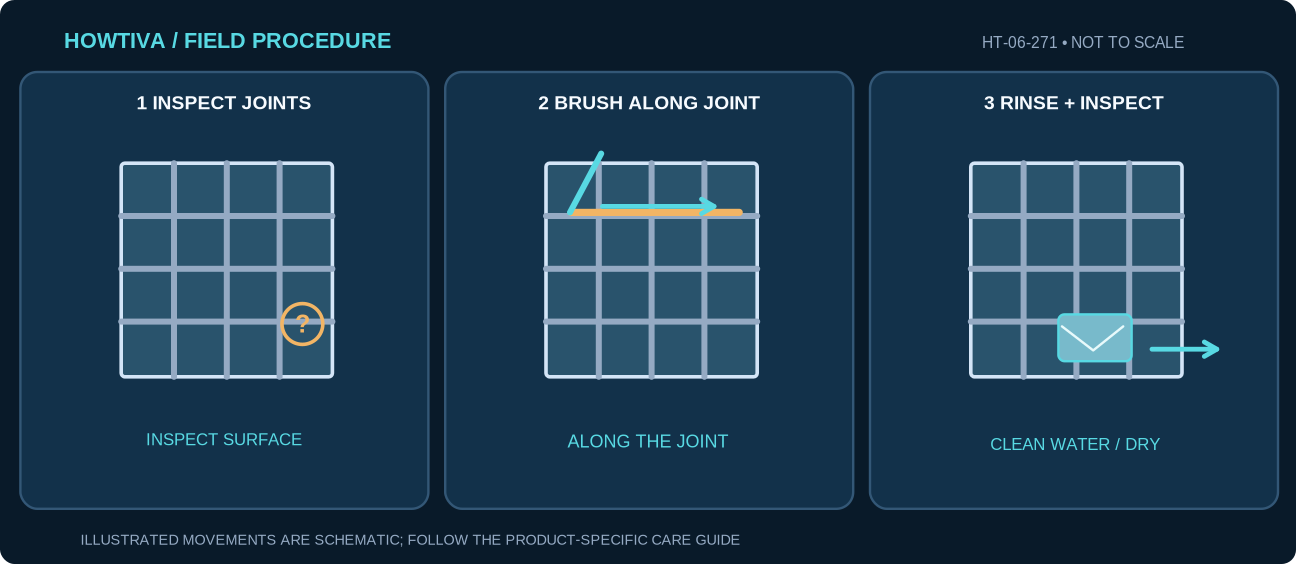
Step 4: Agitate gently along the joint line
Apply product for the labeled time and brush lengthwise with soft bristles. Do not use stiff wire brushes, knives, drill-mounted abrasive heads or repeated aggressive scraping that cuts away the grout surface. Check a small inconspicuous area for color transfer.
Step 5: Rinse thoroughly and remove dirty water
Wipe loosened dirt away with a fresh cloth, change rinse water often and avoid dragging soil back across adjacent joints. Do not leave alkaline cleaner on a sealed floor or let runoff sit along painted baseboards.
Step 6: Dry and assess stains versus damage
Allow joints to dry thoroughly before judging the original color. Remaining dark marks may be staining, mildew, porous contamination or damaged sealer. If grout is hollow, cracked or flaking, arrange joint repair rather than repeat cleaning at higher concentration.
Practical examples: when the procedure changes
White-grout kitchen backsplash has sticky grease
Use a grout-compatible mild alkaline product and soft brush, then rinse. Test painted or metallic tiles individually.
Dark grout in a marble shower looks faded
Stone needs a neutral cleaner and intact compatible sealer. Do not scrub pigment out or pour on acidic rust removers; seek stone/grout advice if damage persists.
Troubleshooting: what can go wrong
Grout powder comes away with the brush: Stop: the joint may be deteriorating rather than merely stained.
White haze returns after rinsing: Could be efflorescence or retained cleaner; investigate moisture source, do not automatically reach for acid.
A grout sealer looks patchy: Inspect the specific sealer care instructions; some cleaners can strip topical layers.
Black discoloration comes back rapidly: Fix wet conditions and assess whether mold is growing beyond the accessible grout surface.
Alternatives, materials and model differences
For epoxy or urethane grout, use the product’s own cleaning instructions rather than the cement procedure. If a specialist efflorescence remover is considered, TCNA cautions strong acids carry risks and professional application may be needed. Sealing does not repair active water migration.
Stop conditions and when to request qualified help
Stop for cracked joints, lifting tile, continuous wetness, spongy substrate, extensive mold or signs that brushing removes grout rather than dirt. Do not mix acid with bleach or another chemical.
Frequently asked questions
Is vinegar safe for cement grout?
The Tile Council states acid can dissolve cementitious grout; use an appropriate compatible cleaner instead.
Why is grout still dark when dry?
Color may reflect deep staining, moisture, sealer changes or permanent damage. Do not assume a stronger chemical is safe.
Sources & further reading
-
Tile Council of North America: Cleaning Grout
Use the checklists as you go, and confirm the result before moving on to a more involved repair.