How to Clean BlindsWithout Removing Them
Leave supported blinds mounted, tilt their slats almost closed, and dust lightly with a soft microfiber cloth or a vacuum brush at low suction. Reverse the tilt and repeat. Use moisture only if the blind material and manufacturer permit it.
Quick answer: Leave supported blinds mounted, tilt their slats almost closed, and dust lightly with a soft microfiber cloth or a vacuum brush at low suction. Reverse the tilt and repeat. Use moisture only if the blind material and manufacturer permit it.
Who this is for: Regular cleaning of accessible metal, vinyl, composite or wood slat blinds. Cellular, honeycomb, fabric, woven wood and motorized shades have different limits and should follow the exact product manual.
Before you begin: materials and safety
Gather the following:
- Soft microfiber cloth or duster
- Vacuum with gentle brush attachment and low suction
- Dry towel for sill; optional barely damp cloth if material allows
- Blind material/model care instructions
Step-by-step instructions
Step 1: Identify the blind type and controls
Check whether the window covering is aluminum, PVC, real wood, faux wood, pleated, honeycomb or fabric. Determine whether it is corded, cordless or motorized. Do not disconnect brackets to perform a dry surface dusting; keep children away from exposed operating cords.
Step 2: Turn off motorized controls and stabilize the blind
If the blind is motorized, follow manufacturer guidance to stop unintended movement before touching the slats. Place a towel beneath to catch fallout. Stand on the floor where possible, or use a stable low step only when safely within reach.
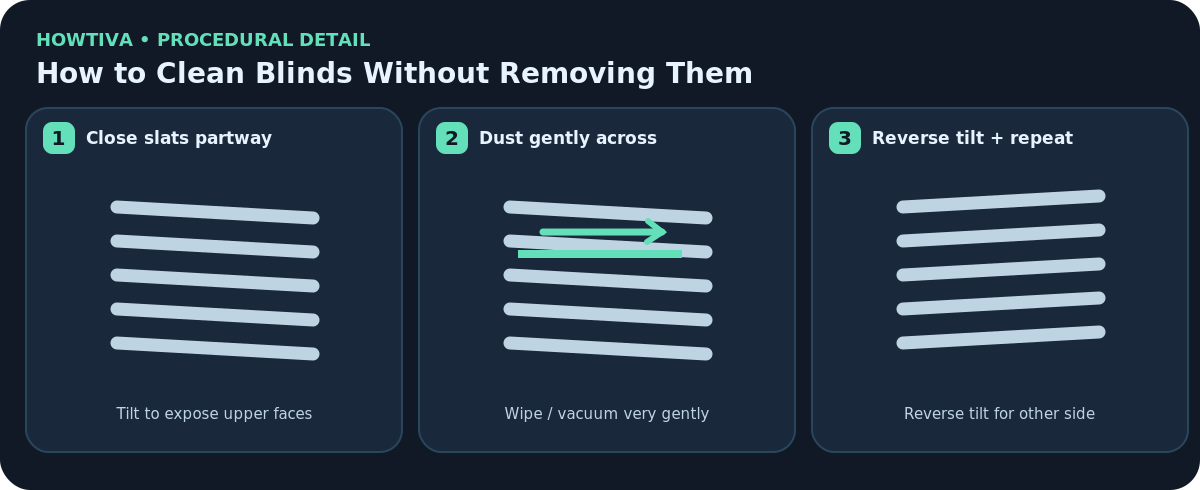
Step 3: Tilt slats until most upper surfaces are visible
Rotate to a near-closed angle instead of flattening slats under pressure. Support thin metal slats with your free hand. Avoid bending their edges, stretching cords or forcing a tilt mechanism that feels stuck.
Step 4: Dust each exposed slat lightly
Wipe from one end toward the other with a dry microfiber cloth or apply a vacuum soft brush with low suction. Start at the top and work downward so dust does not resettle on completed slats. Gently lift dust without pressing slats into each other.
Step 5: Reverse tilt and reach the opposite faces
Rotate slats the other direction and repeat. Clean the headrail exterior with a dry cloth, avoiding motor housings and control openings. Use a small dry brush for accessible gaps rather than spraying water into mechanisms.
Step 6: Use limited moisture only for approved materials
Some metal or vinyl blinds can be wiped with a damp cloth and mild detergent according to the maker. Real wood and specialty cellular products may not tolerate this. Apply liquid to the cloth, not directly to slats, dry immediately and never immerse an installed blind.
Step 7: Finish, check movement and maintain
Let any damp slats dry in a supported position, then test the tilt gently. Clean dust off the sill and nearby window frame. Repeat light dry dusting regularly rather than delaying until oily buildup requires aggressive cleaning.
Two real-world situations where the method changes
Metal Venetian blinds with kitchen dust
Vacuum loose dust before making minimal manufacturer-approved damp passes on metal slats.
Natural wood blinds in a living room
Favor a dry microfiber method; moisture may warp or stain wood and trim.
Troubleshooting: if the result is not right
Slats bend while wiping: Reduce pressure, support each slat and avoid gripping an entire stack.
Headrail is sticky or clicking: Do not force the control; ask the maker about maintenance.
Motor housing gets damp: Stop immediately, isolate according to instructions and seek electrical/product support.
Fabric shade shows water spots: Do not use slat-cleaning tips on fabric shades; inspect care label.
Alternatives and manufacturer differences
- Cellular and fabric shades may need low-suction vacuuming only; some materials exclude vacuuming or spotting entirely.
- Use an extendable soft duster from the floor if the top rail is within a safe reach.
- If the window covering needs dismantling to be cleaned safely, contact a blind specialist rather than improvising removal.
When to stop and ask a professional
Stop for damaged cords, unstable mounting, access requiring unsafe height, broken slats with sharp edges, or moisture near a motor.
Final checks and prevention
Check each slat dries without warping and that blind mechanisms tilt smoothly without binding or exposed cord hazards.
Frequently asked questions
How do I know when to stop?
Stop for damaged cords, unstable mounting, access requiring unsafe height, broken slats with sharp edges, or moisture near a motor. A clean appearance alone does not prove that contaminated food, persistent water ingress, damaged fabric or faulty equipment is safe.
Sources & Further Reading
- LEVOLOR — How to Clean Blinds and Shades (Dry dusting and low-suction vacuum by shade type.)
- Pella — How to Clean Windows (Dust blinds and shades as part of routine window maintenance.)
Use the checklists as you go, and confirm the result before moving on to a more involved repair.