How to Clean White Sneakers
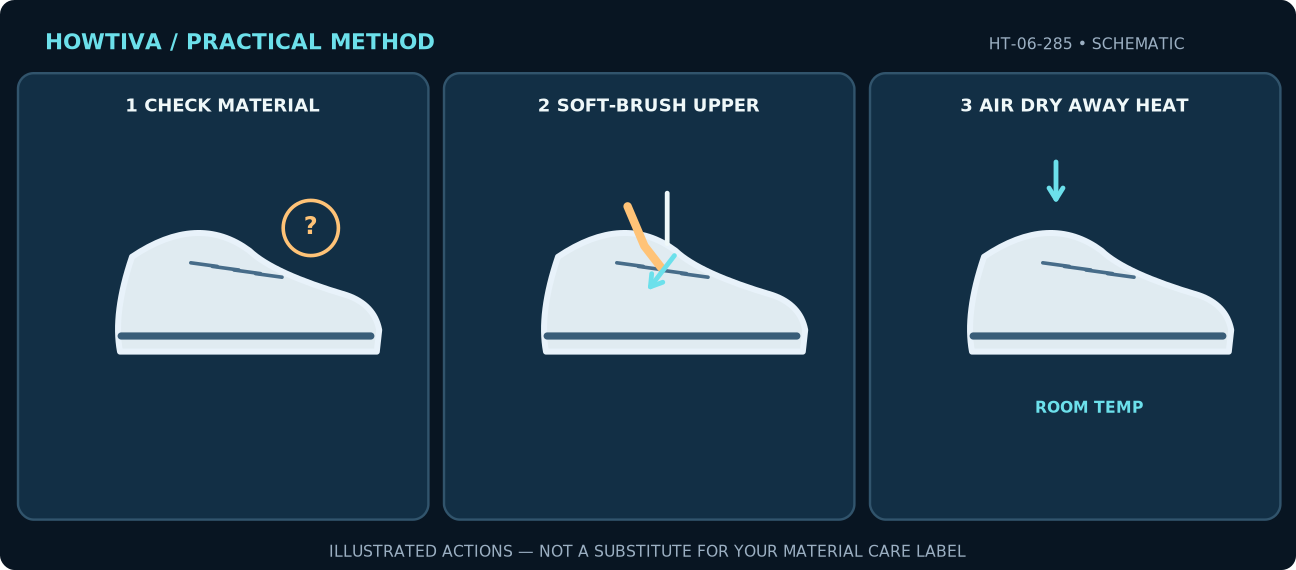
Identify whether the upper is leather, canvas, mesh, knit or suede. Remove loose dry dirt and laces, spot-clean compatible materials with a soft brush or cloth and mild soap solution, wipe away residue, stuff the shoes to hold shape and air-dry away from direct heat.
Quick answer: Identify whether the upper is leather, canvas, mesh, knit or suede. Remove loose dry dirt and laces, spot-clean compatible materials with a soft brush or cloth and mild soap solution, wipe away residue, stuff the shoes to hold shape and air-dry away from direct heat. Do not machine-wash unless that exact shoe’s instructions permit it.
For ordinary white casual sneakers made with commonly cleanable coated leather, canvas or fabric panels. Suede/nubuck, glued decorations, specialty waterproof membranes and performance treatments need model-specific care. “White” describes color, not material compatibility.
Before you begin: safety and materials
What you need:
- Exact shoe model/material care instructions
- Soft shoe brush or microfiber cloth plus separate outsole brush
- Bowl of lukewarm water with small amount of mild dish soap if allowed
- Clean damp cloth and dry absorbent paper for shape support
- Separate small container for washable laces
Step-by-step instructions
Step 1: Identify each material zone before wetting
Look at the shoe box, care page and upper material label. A sneaker may combine smooth leather, mesh, suede, coated plastic and rubber. Locate any cracked coating, loose glued trim or existing color transfer. For suede, do not follow the wet-soap method meant for canvas or coated leather.
Step 2: Remove laces and dry-brush loose dirt
Place shoes on a towel, remove laces and brush dry dirt from seams and the tread. Use a softer brush on uppers than on rubber outsoles. Do not grind grit into the toe box: a dry-first step reduces surface scratching, especially on smooth white leather.
Step 3: Test a small hidden area and prepare mild suds
Mix a little mild dish soap into lukewarm water only if the shoe maker allows it. Test on the outer edge of the tongue or another discreet spot and look for yellowing, color bleed or texture change. Do not soak shoe interiors or glued seams.
Step 4: Clean outsole and upper with different pressure
Use the firmer brush only on rubber tread and midsole. For canvas or knit, use gentle short strokes with a soft slightly damp brush; for smooth leather use a soft cloth. Wipe the soiled foam frequently with a clean towel to stop gray water from staining white areas.
Step 5: Clean laces separately and remove soap residue
Hand-clean washable laces in a small bowl, rinse and lay them flat to dry; replace laces that are frayed or badly discolored. Wipe residual soap off the upper with a separate clean damp cloth, avoiding saturation of foam padding and glued panels.
Step 6: Reshape and air-dry fully before wearing
Insert clean white paper or a shoe form to support the toe. Leave shoes in room-temperature airflow, away from radiators, dryers and direct heat that can warp rubber or weaken adhesives. Allow laces and insoles to dry separately when removable, then reassemble after fully dry.
Practical examples: when the procedure changes
White canvas shoes with dirty rubber toe caps
The textile upper needs gentle brushing while rubber is usually more robust. Work zone by zone rather than rubbing the same hard brush across both. Test first and do not put the shoes in a washer unless the shoe maker allows it.
White coated leather sneaker with a suede overlay
Spot-clean the coated leather with a damp soft cloth but keep wet cleaning away from suede. Use a dry suede brush or brand-approved specialist product on that panel only.
Troubleshooting: what can go wrong
The white upper turns slightly yellow: Stop adding cleaners, remove residue gently if safe and let dry. Yellowing can be aged adhesive, detergent or material change; stronger bleach may worsen it.
A gray mark keeps reappearing: Change dirty water and cloths; work from cleaner zones toward dirtier soles to reduce redeposition.
Sneaker smells damp after cleaning: Allow longer ventilation and keep removable insoles separate; do not trap moisture with early relacing.
A suede section darkens: Stop wetting and follow specialty suede guidance; professional care may be safer.
Alternatives, materials and model differences
Converse gives different methods for canvas/leather versus suede and warns not to machine-wash or tumble-dry its models. adidas describes soft brushes and soapy water on an appropriate Superstar-style leather upper. These are brand-specific examples, not universal permission for all sneakers. Material-specific sneaker-cleaning kits may be useful if approved for the finish.
Stop conditions and when to request qualified help
Stop if a bonded trim detaches, protective finish peels, material dye bleeds or the shoe is suede/nubuck and you lack approved specialist care. Do not use chlorine bleach, acetone, heat guns or powerful abrasion as a default white-shoe method.
Frequently asked questions
Can white sneakers go in a washing machine?
Only if the exact shoe maker says so; some major brands explicitly recommend hand cleaning and no machine washing.
How do I clean white suede sneakers?
Start with an approved dry suede brush and the maker’s instructions; do not use the damp-soap canvas method.
Should I place shoes in direct sunlight to whiten them?
Follow the model’s drying guidance; direct heat and sun can affect adhesives, finishes and some colored trim.
Sources & further reading
-
Converse: How to Clean Your Converse Shoes
-
adidas: How to Clean Shoes
-
adidas: White Shoes — Care FAQ
Use the checklists as you go, and confirm the result before moving on to a more involved repair.