How to Remove Pet Hair from Upholstery
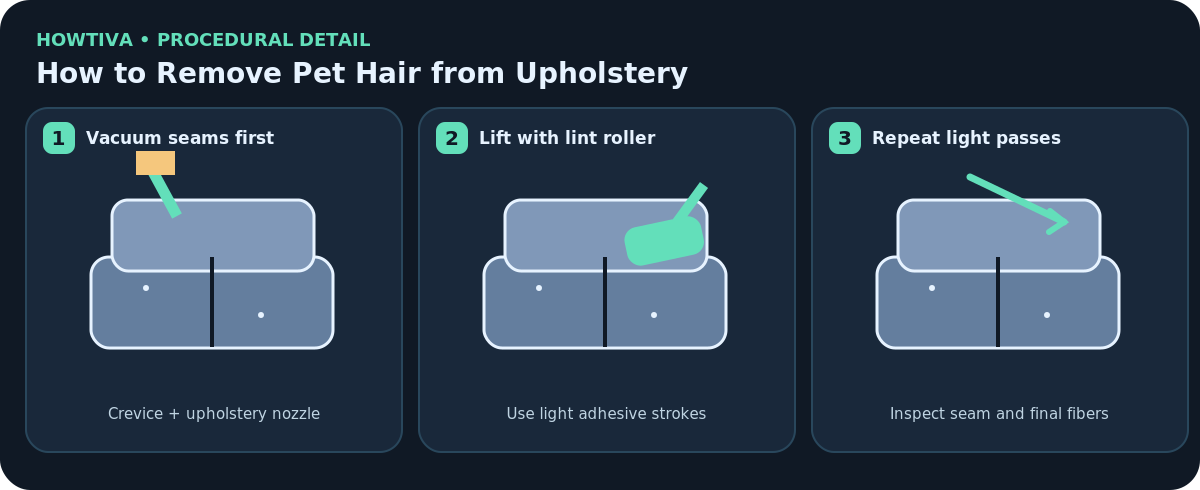
Vacuum the couch with its approved upholstery attachment, including seams, then lift remaining hair with a clean lint roller or a fabric-compatible rubber tool using light strokes. Empty the vacuum as needed and avoid excessive rubbing.
Quick answer: Vacuum the couch with its approved upholstery attachment, including seams, then lift remaining hair with a clean lint roller or a fabric-compatible rubber tool using light strokes. Empty the vacuum as needed and avoid excessive rubbing.
Who this is for: Routine loose cat or dog hair on sound upholstery. It does not replace cleaning urine, feces, allergens, flea infestation, damage or an unknown vintage textile.
Before you begin: materials and safety
Gather the following:
- Vacuum upholstery attachment set to a safe suction level
- Lint roller with fresh adhesive sheets; optional soft rubber pet-hair tool
- Soft clean cloth, good task lighting and a small waste bag
- Furniture care code and the vacuum manufacturer’s upholstery guidance
Step-by-step instructions
Step 1: Read the sofa label and inspect the weave
Find the upholstery-care code or cleaning label and check for snagged loops, pilling, loose fibers or fragile embroidered areas. Even when a sofa tolerates a damp cleaner, pet-hair removal usually begins dry. Keep rotating brushes away from loosely woven fabrics unless the maker permits them.
Step 2: Remove throws and cushions only where safe
Lift removable cushions according to furniture instructions, set covers aside and vacuum the platform beneath. Do not unzip and machine-wash a fixed cushion cover merely because a zipper exists. Washable throws may be handled separately under their own labels.
Step 3: Vacuum corners, seams and broad panels
Attach the upholstery nozzle or soft brush and work from the top of the seat back toward the cushions. Move slowly along seams, piping and between cushions, then across broad fabric panels. Reduce suction if the weave lifts or the nozzle catches; do not grind the nozzle into the textile.
Step 4: Lift remaining hair with a clean lint roller
Make short overlapping passes, checking that the adhesive does not pull fibers or a decorative finish. Refresh the sheet as it fills. For tightly woven, sturdy fabrics, a fabric-approved rubber pet-hair tool may gather embedded hairs into small lines ready to lift by hand.
Step 5: Inspect the fabric in angled light
Use a lamp from the side to reveal remaining fine pale or dark hair. Return to stubborn corners using the narrow attachment gently rather than scraping. Brush or roll lightly along the material grain if the maker provides a preferred direction.
Step 6: Empty debris and clean tools correctly
Dispose of used lint sheets and empty the vacuum following its manual. Clean detachable brush heads so hair does not transfer to another upholstery piece. Grooming pets and laundering washable throws more often can reduce accumulation between deep cleanings.
Two real-world situations where the method changes
Velvet sofa covered with fine cat hair
Start with an appropriate soft attachment and follow the pile direction; adhesives and aggressive rubber tools can disturb velvet.
Pet hair in a narrow armrest seam
Use the crevice tool at low suction along the seam, then finish with a small lint sheet pressed gently into the corner.
Troubleshooting: if the result is not right
Lint roller tugs at threads: Stop adhesive use; try gentle suction or ask the upholstery maker.
Rubber tool leaves shiny areas: Stop friction and assess pile damage; do not scrub harder.
Hair keeps reappearing: Clean blankets, adjacent cushions and pet bedding and maintain the vacuum filter.
Fabric smells or remains stained: Pet-hair removal is not stain treatment; follow the specific upholstery cleaning code.
Alternatives and manufacturer differences
- A washable throw over a frequently used pet seat can be cleaned separately if its own care label allows.
- For pet dander concerns, vacuum model and filter specifications matter; do not describe a vacuum as eliminating allergens without evidence.
- Leather, vinyl, velvet and high-pile fabrics need distinct methods; a damp rubber glove is not universally appropriate.
When to stop and ask a professional
Stop for snagging, adhesive transfer, unstable upholstery dye, wet biological contamination or pests; use a qualified upholstery cleaner where indicated.
Final checks and prevention
Check seams and corners for leftover fibers and clean tools before storing; regular grooming and washable throws can reduce repeated work.
Frequently asked questions
How do I know when to stop?
Stop for snagging, adhesive transfer, unstable upholstery dye, wet biological contamination or pests; use a qualified upholstery cleaner where indicated. A clean appearance alone does not prove that contaminated food, persistent water ingress, damaged fabric or faulty equipment is safe.
Sources & Further Reading
- Dyson — How to Remove Pet Hair and Control Pet Allergies (Upholstery pet hair collection with vacuum, lint roller and gentle tools.)
- La-Z-Boy — Fabric & Leather Care (Care codes and routine vacuuming; fabric safety cautions.)
Use the checklists as you go, and confirm the result before moving on to a more involved repair.