How to Clean a Microwave with Steam
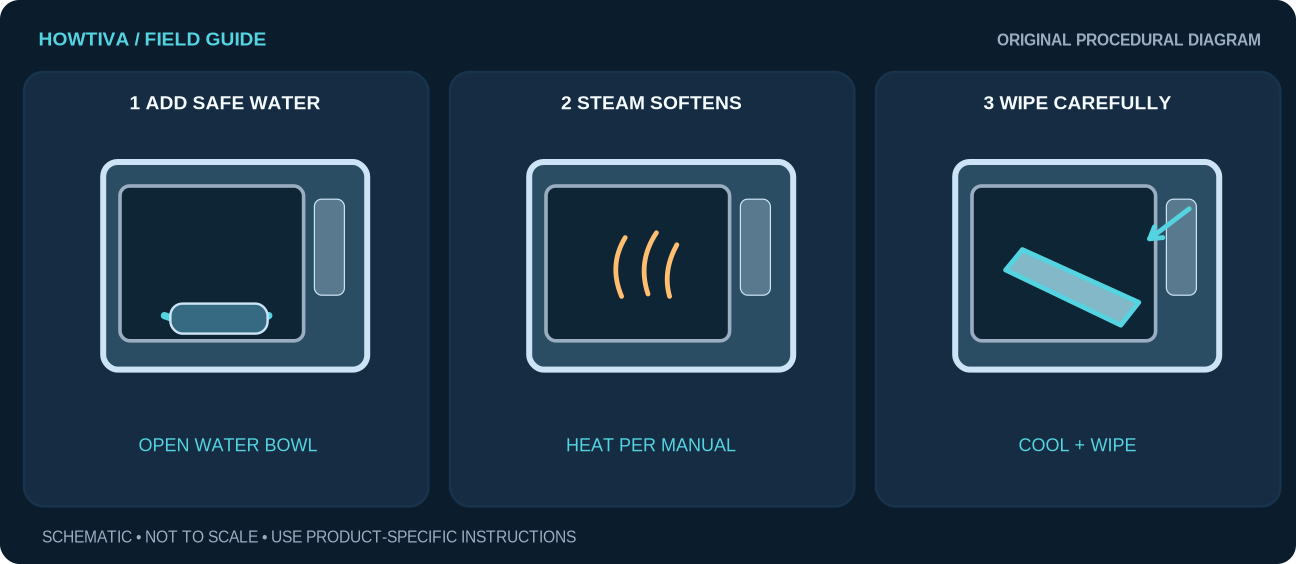
For an ordinary microwave without a dedicated steam-clean program, place about 250 mL (1 cup) of water in an open microwave-safe container and, if the manual permits, heat it for the appliance-recommended time to soften soil.
Quick answer: For an ordinary microwave without a dedicated steam-clean program, place about 250 mL (1 cup) of water in an open microwave-safe container and, if the manual permits, heat it for the appliance-recommended time to soften soil. Whirlpool gives roughly 2–5 minutes for some models. Let steam and the container cool enough to handle, then wipe softened residue with a soft damp cloth and dry. Never heat a sealed container, handle hot liquid bare-handed or use an unknown vessel.
Applies to a domestic microwave cavity in sound condition. Drawer microwaves, combination/convection ovens and automatic Steam Clean modes may have different bowl sizes, time limits and button sequences. Steam softens splatter; it is not a sterilization claim or a repair procedure.
Before you begin: safety and materials
What you need:
- Microwave-safe open bowl or container compatible with the manual
- About 1 cup (250 mL) clean water if model instructions permit
- Soft cloth or nonabrasive sponge and mild dish soap as permitted
- Heat-resistant gloves or oven mitts for hot container
Step-by-step instructions
Step 1: Confirm appliance safety and cool the surfaces
If the microwave has arced, has a burnt waveguide cover, damaged door, faulty latch or exposed metal damage, stop using it. Check that controls are off and the cavity is cool before cleaning. Wipe away loose crumbs without brushing into vents.
Step 2: Check for a dedicated Steam Clean setting
Find the model instructions. Some Whirlpool microwaves direct users to add 250 mL water in a suitable vessel and press Steam Clean/Start; others suggest ordinary heating. Do not invent a Steam Clean button on a model that lacks it.
Step 3: Set up an open microwave-safe water vessel
Use clean water in a wide, stable, clearly microwave-safe container. Never use sealed jars, metal vessels or an empty bowl. Avoid placing water right against the door or control housing. Confirm water quantity and container dimensions if the model specifies them.
Step 4: Steam for the instructed duration without boiling dry
If your model supports the manual method, follow its time and power instructions: Whirlpool describes 1 cup of water for about 2–5 minutes in some manuals. Stop if water level drops too low, unusual sounds occur or hot liquid begins spilling. Do not leave the appliance unattended.
Step 5: Allow hot water and trapped steam to settle
When the cycle completes, open the door cautiously away from your face, using heat protection to lift the vessel. A bowl can scald even after heating stops. Do not immediately splash cold water on a hot glass turntable.
Step 6: Wipe softened grime, rinse and dry
Use a soft damp cloth and a little mild dish soap if permitted. Clean the door seal contact area gently and wipe away detergent with clean damp cloth. Dry lint-free. Let a hot glass turntable cool before washing and reinstall it correctly for ordinary operation.
Practical examples: how the steps change
Dried tomato sauce spots on the roof
Steam can soften splatter so a soft cloth lifts it. If residue remains, repeat only the manufacturer-permitted cleaning method; avoid scraping painted interior coating.
Microwave has a dedicated Steam Clean button
Follow its built-in program rather than manually choosing a guessed time. Whirlpool specifies water quantity, vessel shape and hot-container gloves in its instructions for certain models.
Troubleshooting the problems people actually encounter
The bowl is extremely hot or water boils vigorously: Stop heating; allow it to cool. Do not lift or jostle superheated water suddenly.
Burnt smell persists after wiping: Check for charred food; if smell suggests damaged components or arcing, unplug and have it inspected.
Film remains on the door gasket: Use a soft cloth only; do not damage the seal or force cleaner into hinge slots.
Turntable cracks after washing: Rapid temperature change can damage glass. Do not continue operating with a damaged turntable.
Alternatives, product differences and limitations
For a machine with no approved water-steam method, use its standard soap-and-water interior care instead. For combined microwave/convection ovens, wait for all surfaces to cool, then follow the specific coating and program instructions. Lemon juice or vinegar is optional only where the manufacturer expressly permits it.
When to stop and seek qualified help
Stop for damaged door or latch, arcing, smoking, burning wiring odor, rust holes, cracked cavity panels or a loose waveguide cover. Steam cleaning cannot make a damaged microwave safe.
Frequently asked questions
Does steam disinfect the microwave?
The cited method is intended to soften soil and aid cleaning, not to guarantee sterilization.
Can I use a sealed jar of water?
No. Use a stable open microwave-safe vessel; pressurized containers and boiling hot water can cause severe burns.
Sources & further reading
-
Whirlpool: How to Clean a Microwave
-
Whirlpool Product Help: Steam Cleaning — Microwave
-
Whirlpool Product Help: General Cleaning — Microwave Drawer
Use the checklists as you go, and confirm the result before moving on to a more involved repair.