How to Clean a Showerhead
Turn off water, inspect the showerhead finish and mechanism, then gently rub flexible nozzles with a finger or soft cloth to dislodge minerals.
Quick answer: Turn off water, inspect the showerhead finish and mechanism, then gently rub flexible nozzles with a finger or soft cloth to dislodge minerals. Delta recommends this for Touch-Clean showerheads. For removable heads or heavier buildup, follow the specific manufacturer’s soak instructions; Delta permits 50/50 white vinegar and water for certain non-Touch-Clean models, but this is not universal.
For accessible domestic showerheads and hand showers only. Do not dismantle concealed plumbing, thermostatic mixing valves, electrical shower units, pressure regulators or non-serviceable fixed heads. Chrome, gold, matte black, brass and plastic coatings may have conflicting chemical limits.
Before you begin: safety and materials
What you need:
- Model number or maker’s published care instructions
- Soft clean cloth, gentle nylon brush where permitted
- Container for rinsing or compatible approved soak only when manual allows
- Towel, hand protection and safe stable floor footing
Step-by-step instructions
Step 1: Turn off flow and identify the nozzle type
Allow hot fittings to cool. Inspect for flexible silicone Touch-Clean nubs, removable spray plates or fixed metal jets. Read finish restrictions and any filter-screen service instructions. A low flow may also reflect a plumbing or supply issue, not just visible limescale.
Step 2: Protect the finish and keep the head supported
Dry the exterior and place a cloth under your work. Do not hang full body weight on a shower arm, use a wrench on decorative plating or pull down on flexible hoses. If a showerhead is cracked or leaking at the swivel, cleaning may not restore it.
Step 3: Rub accessible flexible nozzles gently
On Delta Touch-Clean spray faces, lightly wipe or rub the elastomer holes to break up mineral crust. This is a manufacturer-provided method for that mechanism; do not push pins or metal needles into jets, which can damage rubber and restrictors.
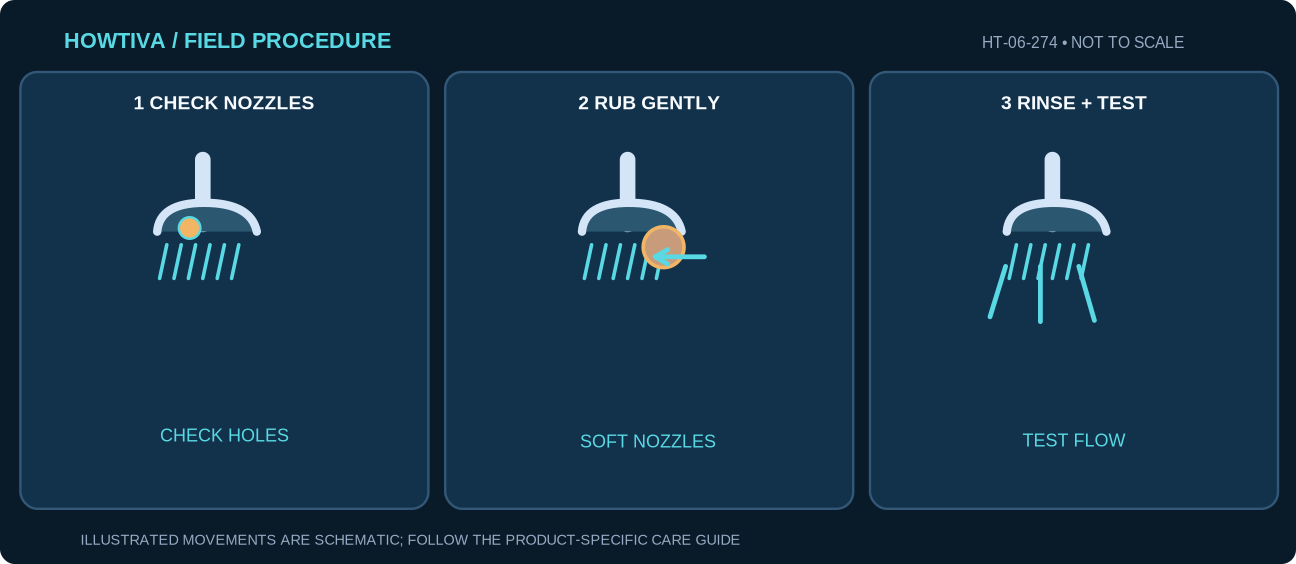
Step 4: Use only an approved deposit-removal treatment
If tougher buildup remains and the exact showerhead maker permits soaking, detach an approved component and use the stated solution/time. Delta specifically mentions 50/50 white vinegar/water for some non-Touch-Clean heads; other finishes may forbid acid. Never trap chemicals in a plastic bag around unknown plating.
Step 5: Rinse all residue and refit serviceable components
Flush detached components with clean water and reinstall seals or screens in the order described by the manual. Do not overtighten threaded fittings or use incompatible thread sealants. Keep electrical shower controls and painted walls dry during work.
Step 6: Check spray quality and inspect for leaks
Run cool water initially and check for a more even spray. Look for leaks around the connection, dripping at the handle, unusual pressure or loss of temperature control. If mineral removal did not change flow, use the model’s troubleshooting guide or qualified plumbing assessment.
Practical examples: when the procedure changes
A Delta Touch-Clean head has uneven spray
Start with the flexible nozzle wipe rather than removing or soaking the whole showerhead.
An older non-Touch-Clean head has scale crust
Delta describes a diluted white-vinegar soak for some such models, but only use it if its finish and specific instructions allow the method.
Troubleshooting: what can go wrong
Water leaks after reassembly: Turn off flow and check the manufacturer-specified gasket seating. Do not keep tightening a plastic fitting until it splits.
The black finish becomes dull: Stop any acidic or abrasive cleaner; finish damage may be irreversible.
Nozzle holes remain obstructed: Do not ream with needles. Locate the permitted filter-screen service path or contact support.
Hot water becomes erratic during test: Stop and seek plumbing/service help; a showerhead cleaning cannot fix a mixing valve fault.
Alternatives, materials and model differences
CDC recommends cleaning showerheads and faucet aerators when buildup is visible, following maker instructions. If a head cannot be cleaned safely or is internally blocked, model-compatible replacement may be preferable to destructive disassembly. This is mineral removal, not a guarantee of water sterilization.
Stop conditions and when to request qualified help
Stop on uncontrolled leakage, shower valve malfunction, electrical proximity, broken supporting pipe, unknown coatings or an instruction to use stronger chemicals than the manufacturer permits. Never mix vinegar with chlorine bleach.
Frequently asked questions
Does vinegar work on every showerhead?
No. Delta permits diluted vinegar for certain non-Touch-Clean products, but coating and model restrictions take precedence.
Will cleaning prevent waterborne germs?
CDC recommends removing visible buildup, but routine home cleaning is not a guarantee of disinfection or safe water if plumbing is contaminated.
Sources & further reading
Use the checklists as you go, and confirm the result before moving on to a more involved repair.