How to Clean a Washing Machine
Empty the washer, wipe accessible door and seal surfaces with a soft damp cloth, then run the machine’s designated Clean Washer/Tub Clean/Drum Clean program using only the cleaning agent and dose allowed in its manual.
Quick answer: Empty the washer, wipe accessible door and seal surfaces with a soft damp cloth, then run the machine’s designated Clean Washer/Tub Clean/Drum Clean program using only the cleaning agent and dose allowed in its manual. Afterward, wipe residual moisture and let the drum and dispenser dry with safe ventilation. Do not put laundry in a cleaning cycle or mix bleach with vinegar or any other cleaning product.
For standard household front-load or top-load clothes washers in serviceable condition. Exact programs, cleaning frequency, dosing location, door seals, dispensers and accessible drain filters vary; this is not an instruction to open panels or the pump. The manual controls whether cleaners, bleach or temperature settings are permitted.
Before you begin: safety and materials
What you need:
- Washer make/model label and use-and-care manual
- Soft damp cloth, mild soap if permitted and clean towel
- Only an approved washer cleaner, amount and loading location
- Small light to inspect the seal fold and accessible dispenser
Step-by-step instructions
Step 1: Check for active faults before cleaning
If the machine leaks, sparks, smells of burning, trips a breaker, makes grinding noises or has a blocked drain, stop using it and arrange qualified service. Do not use cleaning as a way to mask faults.
Step 2: Empty the washer and check the visible drum
Remove all clothes, loose coins, tissues and accessories. On a front-loader, gently inspect the accessible rubber door seal for lint or trapped items, taking care not to damage the rubber; top-loaders may have different rim and tub designs.
Step 3: Wipe seal, glass and compatible dispenser parts
Follow the manual’s removable-drawer instructions. Use a soft damp cloth; rinse visible soap films and dry accessible folds. Do not pull an unknown drawer free against its stop or pour water into electrical control areas.
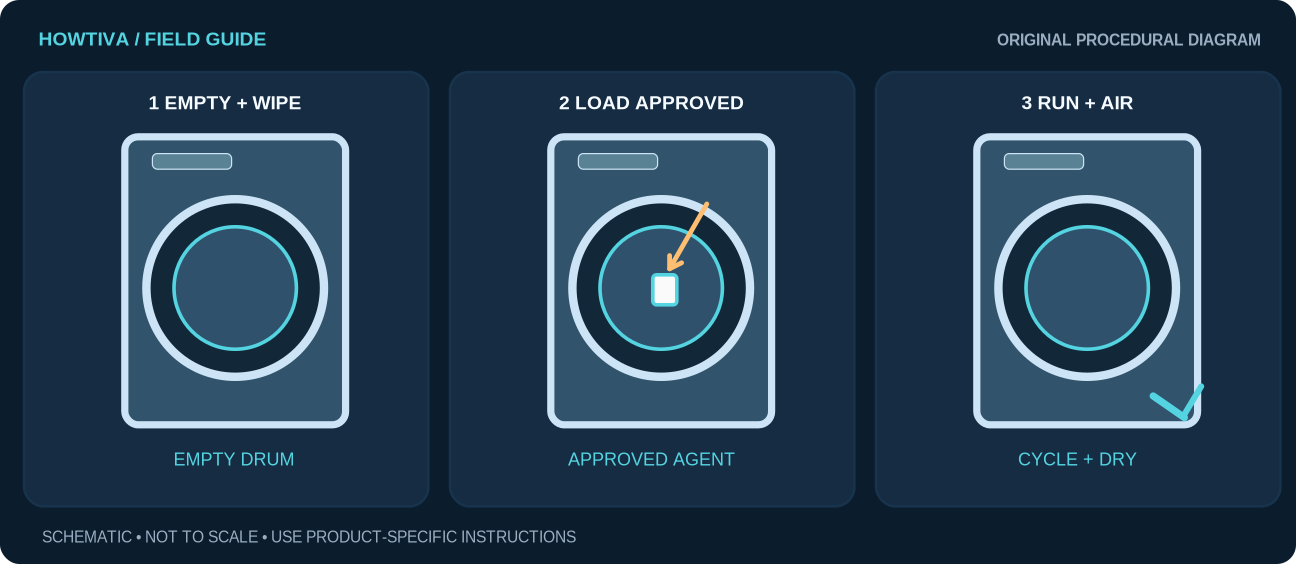
Step 4: Load the approved cleaner in the correct place
Whirlpool’s Clean Washer with affresh guidance says to put one affresh tablet in the empty basket rather than the dispenser and not combine it with detergent or other chemicals. This applies to appropriate Whirlpool cycles; follow your washer brand’s permitted cleaner and dispensing method.
Step 5: Run the model-specific cleaning program uninterrupted
Select Clean Washer, Tub Clean, Drum Clean or the equivalent in your manual. Whirlpool notes that some models without the dedicated program use hot/high-water alternatives; that is not permission to improvise hot bleach mixtures on every washer. Allow the full program to finish.
Step 6: Rinse or wipe as instructed and dry
If the maker instructs an additional rinse, perform it. Wipe any remaining moisture and leave the lid or door ajar only when safe from pets and children; allow dispenser air circulation as recommended. Refit any removed drawer before laundry use.
Practical examples: how the steps change
Front-loader has a musty door-seal smell
Inspect the accessible fold for residue and dry it. A correctly run drum-clean cycle may help, but persistent odor with standing water could indicate drainage or concealed buildup needing service.
Top-loader has a clean-cycle reminder
Remove laundry and run its approved cleaner cycle. Some models display periodic reminders; do not assume a flashing light means adding extra chemicals.
Troubleshooting the problems people actually encounter
Cleaner tablet is still visible: Follow the product and machine guides: incorrect program, old cleaner or interrupted cycle may matter. Do not add extra doses on speculation.
Foam remains after cleaning: Use the manufacturer’s stated rinse path; adding more cleaning agent can worsen the problem.
Water remains at the bottom: Check the user-accessible drain advice only if your exact model permits it; never open panels while powered or hot.
Smell returns rapidly: Check door ventilation, detergent amount and visible gasket residue; persistent leakage or sewer smell needs professional diagnosis.
Alternatives, product differences and limitations
Some appliance manuals permit liquid bleach instead of a specified tablet; others prohibit it, including some all-in-one machines. Never mix or alternate chemical cleaners without complete rinse according to the manual. Washer cleaner is not equivalent to dishwasher detergent or household descaler.
When to stop and seek qualified help
Stop for an electrical fault, hot water leak, unsafe drain access, cracked seal, unexplained standing water or persistent overflow. Always keep children and pets clear of an open washer and all cleaners.
Frequently asked questions
Can I pour vinegar and baking soda into my washer together?
Do not improvise mixtures. Use only the cleaning products, compartment and cycle approved in the appliance manual.
Should I clean the lint or pump filter?
Only if the user manual identifies an owner-cleanable filter and safe drain method; the procedure differs greatly by washer design.
Sources & further reading
-
Whirlpool Product Help: Cleaning Washers with affresh
-
Whirlpool Product Help: Clean Washer with affresh — All-in-One Washer Dryer
Use the checklists as you go, and confirm the result before moving on to a more involved repair.