How to Clean an Electric Kettle
Unplug the kettle and allow it to cool completely. Wipe the exterior and power base with a barely damp cloth, keeping connectors dry, and rinse the removable spout filter only if the manual allows it.
Quick answer: Unplug the kettle and allow it to cool completely. Wipe the exterior and power base with a barely damp cloth, keeping connectors dry, and rinse the removable spout filter only if the manual allows it. To clear interior mineral scale, use the kettle manufacturer’s specified descale solution, dilution and rinse routine. Never immerse an electric kettle or its power base in water.
For ordinary plug-in electric kettles. Some are double-walled, glass, enamel-coated, filter-equipped or temperature-controlled with extra electronics. Do not copy a descaling formula from another kettle model. Distinguish white mineral deposits from corrosion, flaking coatings or electrical trouble.
Before you begin: safety and materials
What you need:
- Exact kettle manual, soft cloth and clean water
- Soft brush for an approved removable filter only
- Manufacturer-approved vinegar solution or proprietary descaler only if specifically permitted
- Heat-safe sink and hand protection for any manufacturer-directed boiling or rinse
Step-by-step instructions
Step 1: Disconnect power and cool completely
Switch off and unplug the base. Lift the kettle only when safe and let hot water cool; never work on hot steam or a powered plug. Keep the cord, contacts and base away from moisture.
Step 2: Empty and wipe surfaces safely
Discard old water and wipe outer surfaces with a soft damp cloth. KitchenAid instructions warn against abrasive scourers and immersing either kettle or base. Protect painted, metal and glass finishes against scratches.
Step 3: Check the spout filter and accessible interior
Inspect for white chalky scale, loose debris or a blocked removable mesh. Remove and rinse a filter only using the exact retention clips described by the manual; never pry a fixed plastic screen or reach into the heating compartment with metal tools.
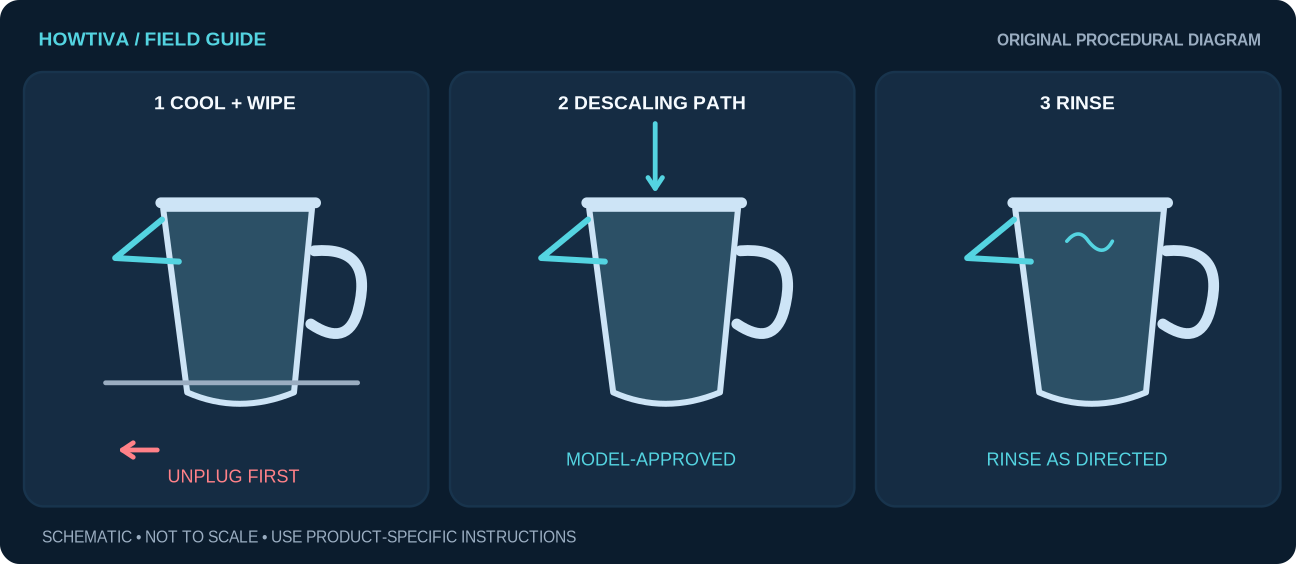
Step 4: Choose a model-approved descaling method
Scale builds where hard water evaporates. Certain KitchenAid models permit a measured white-vinegar-and-water treatment, while Russell Hobbs directs some models to a plastic-compatible descaler. Follow the fill level, ratio, waiting time and boiling instructions printed for your exact model, not a generic online “overnight vinegar boil”.
Step 5: Rinse thoroughly without wetting electrics
After a manufacturer-approved treatment, empty and rinse the interior repeatedly as directed. Certain models require a clean-water boil and discard cycle. Keep the power base dry and replace the removable filter before normal use.
Step 6: Inspect before making drinks
Check that scale fragments are cleared, the lid and filter fit, and there is no abnormal smell, corrosion or leak. If bitter acidic odor remains, repeat only the rinse procedure in the manual; do not add another chemical.
Practical examples: how the steps change
White flakes appear at the kettle bottom
They may be ordinary mineral scale. Confirm the manual-approved descaling method and rinse properly instead of chipping flakes with a knife.
Glass kettle has water trapped near the illuminated base
Water near electronics is not a normal cosmetic cleaning issue. Disconnect and seek professional assessment if moisture is inside the sealed electronics housing.
Troubleshooting the problems people actually encounter
The filter still looks white after rinsing: Check if the mesh is removable and descale-compatible. Do not scrape or deform it.
Scale returns quickly: Hard-water supply can redeposit minerals. Use recommended cleaning intervals and fresh water; do not increase acid concentration above the manual.
Kettle switches off too early: Scale may play a role, but a thermostat or other fault is possible; service if approved descaling does not resolve it.
Electric base or plug becomes wet: Do not reconnect power until manufacturer service confirms safety if moisture entered electronics.
Alternatives, product differences and limitations
If your manual bans vinegar, use only the compatible branded descaler and precise mixing instructions. If no safe descaling instructions are accessible, limit cleaning to the approved surface wiping and obtain the manual rather than improvising ratios.
When to stop and seek qualified help
Stop for a damaged cord, cracked kettle, leak, rust at the heating assembly, burning smell, failed auto shutoff or moisture inside electrical components. Never immerse, pressure wash or open the base.
Frequently asked questions
Can I put the whole kettle in the dishwasher?
Not unless the exact manufacturer specifically says so; most electric kettles and power bases must never be immersed.
Is vinegar always recommended?
No. It appears in some manuals but the ratio and method vary by model; others specify a different descaler.
Sources & further reading
-
KitchenAid: How to Clean an Electric Kettle
-
KitchenAid Product Help: Smells and Odors — Electric Kettle
-
Russell Hobbs: The Kettle Does Not Work — Troubleshooting
Use the checklists as you go, and confirm the result before moving on to a more involved repair.