How to Get Coffee Stains Out of Clothes
Blot spilled coffee without rubbing, sponge or rinse the washable fabric with cool water, pretreat with liquid laundry detergent or a labeled stain remover, then wash as its care label allows. Air dry and inspect before applying dryer heat.
Quick answer: Blot spilled coffee without rubbing, sponge or rinse the washable fabric with cool water, pretreat with liquid laundry detergent or a labeled stain remover, then wash as its care label allows. Air dry and inspect before applying dryer heat.
Intended for routine washable cotton, polyester and similar colorfast garments. Coffee with milk, sugar or syrups has additional residues. Dry-clean-only wool, silk, decorated garments and unstable dyes need a specialist.
Before you begin: safety and materials
What you need:
- Garment care label and light-colored absorbent towels
- Cool water and access to a clean sink
- Fabric-safe liquid laundry detergent or prewash stain remover
- Small clean bowl or towel to prevent transfer
- Washer or appropriate handwash materials if label allows
Step-by-step instructions
Step 1: Blot the spill, not the fibers
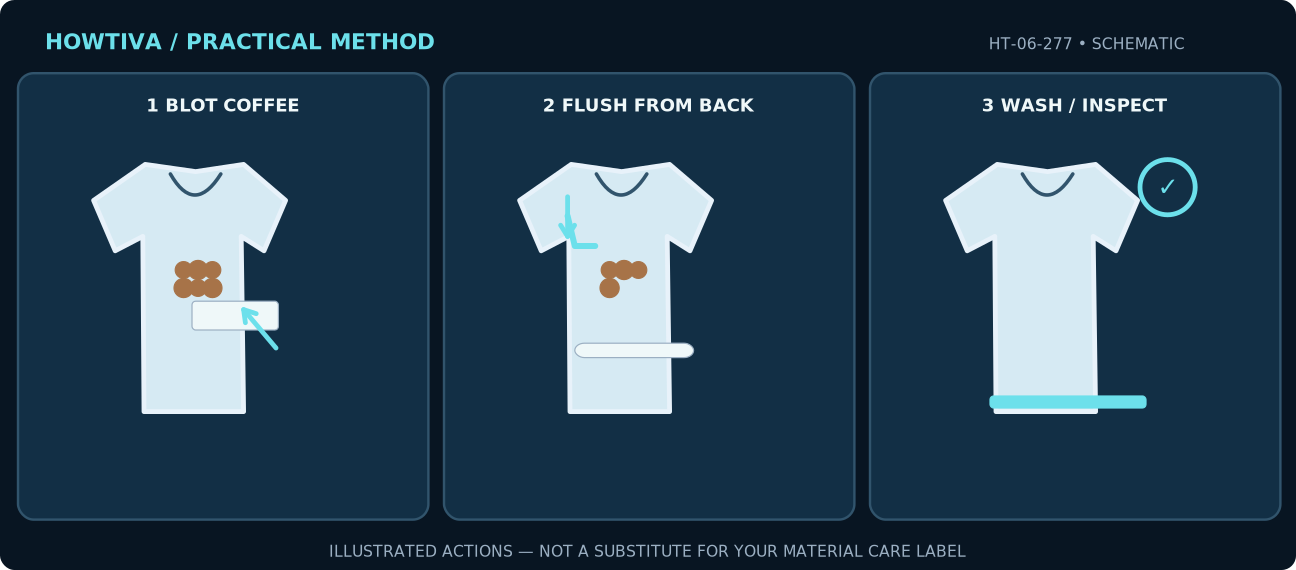
Lift liquid with a clean absorbent cloth, working from the outside of the spot inward. Press and lift; aggressive rubbing drives color deeper and abrades delicate fibers. If coffee splashed across several layers, place a clean towel behind the visible layer first.
Step 2: Read the care label and color-test
Check wash method, permitted water temperature, bleaching rules and drying restrictions. Try the chosen detergent or remover on a hidden seam. If color releases onto the test cloth or trim reacts, stop the home process and seek professional cleaning guidance.
Step 3: Flush from the back with cool water
Hold the garment so cool water reaches the reverse side of the coffee stain and pushes color outward rather than through clean fabric. Keep the flow controlled. If rinsing would wet nonwashable embellishments, blot with a cool damp cloth instead and seek specialist advice.
Step 4: Pretreat with a suitable product
Apply a small amount of approved liquid detergent or prewash remover according to its directions. Work it very gently into washable fabric with a fingertip or cloth; do not mix homemade chemicals. Older marks may benefit from an enzyme laundry product if the fabric and label allow.
Step 5: Wash with the garment’s allowed program
Wash the entire item, not just the spot, using the care label’s temperature limit and normal dosage. If the garment is white and its bleaching symbol permits oxygen bleach, a labeled non-chlorine booster may help; it is optional, not a universal requirement.
Step 6: Inspect while damp and air dry first
Check both sides of the fabric under bright light before machine drying or ironing. If coffee coloration remains, repeat pretreatment and washing rather than baking the mark into fibers. Air-dry where appropriate and check once fully dry for a faint ring.
Practical examples: when the procedure changes
Coffee with milk, cream or sugar
Protein, oil and sugar can linger after the brown pigment fades. Use a laundry detergent appropriate for mixed food stains, rinse thoroughly and avoid skipping the final wash of the full garment.
Dried coffee on a white shirt
Start by rewetting with cool water; pretreat instead of immediately applying hot water or chlorine bleach. Reassess after a normal wash; older stains may need more than one attempt and may not disappear completely.
Troubleshooting: what can go wrong
A brown ring spreads: Use clean towels beneath the spot and blot inward rather than scrubbing a large wet area.
Color remains after the wash: Do not use a dryer; pretreat again using a product suitable for that fabric and follow the label.
Fabric dye bleeds: Stop, rinse out product as directed and ask a professional cleaner for advice.
A milky smell or texture remains: The stain may contain dairy residue; use a suitable enzyme laundry detergent if fabric-safe and rewash.
Alternatives, materials and model differences
If no pretreatment product is available, cool water followed by promptly laundering with an appropriate detergent is a reasonable first response. For dry-clean-only garments, blot excess and tell the professional exactly what was spilled. Never assume a process safe for white cotton is suitable for rayon, wool, silk or embroidery.
Stop conditions and when to request qualified help
Stop if dye transfers, fabric has a dry-clean-only label, a bonded decoration loosens or a solvent-resistant coating is unknown. Avoid combining bleach with other cleaners, and do not dry with heat until the stain is removed.
Frequently asked questions
Can I use hot water on fresh coffee?
Begin with cool water and check the garment label. A subsequent permitted warm wash may be useful, but hot water is not a universal first-aid step.
What if the coffee stain is several days old?
Rewet, pretreat with a fabric-compatible product, wash and inspect. Set stains can persist despite careful repeats.
Sources & further reading
-
American Cleaning Institute: Stain Removal Guide
-
American Cleaning Institute: Laundry Basics
Use the checklists as you go, and confirm the result before moving on to a more involved repair.