How to Remove Red Wine Stains from Fabric
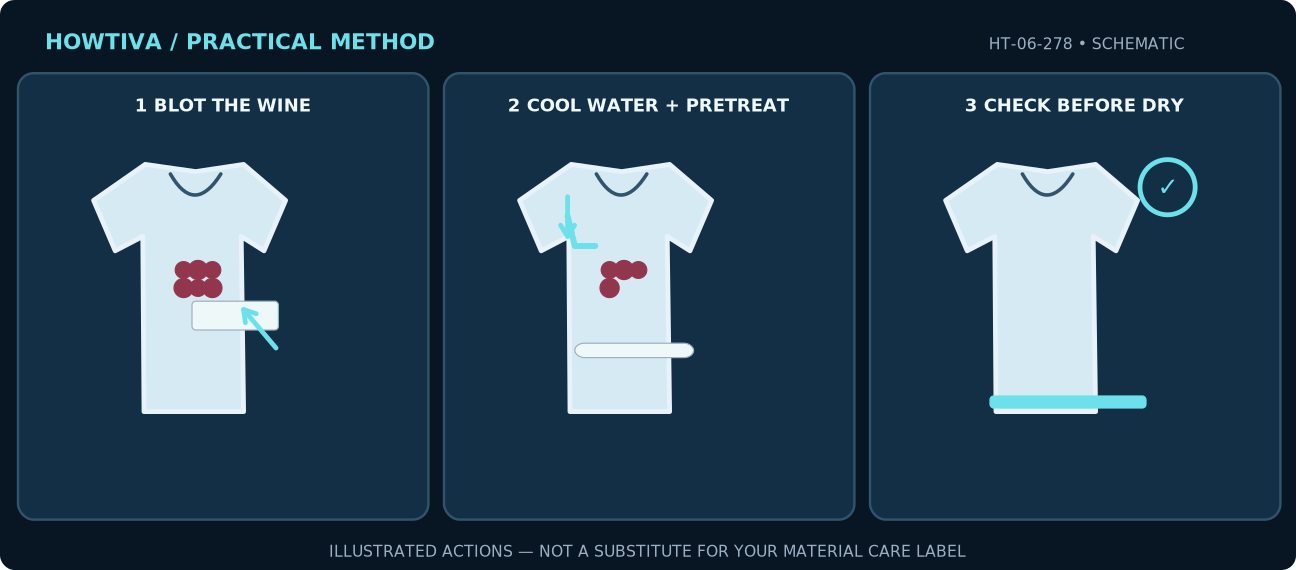
Immediately blot fresh red wine with a white absorbent cloth. For washable, colorfast fabric, use cool water, a compatible prewash stain remover and the garment’s labeled wash process. Keep the item out of the dryer until the mark is gone.
Quick answer: Immediately blot fresh red wine with a white absorbent cloth. For washable, colorfast fabric, use cool water, a compatible prewash stain remover and the garment’s labeled wash process. Keep the item out of the dryer until the mark is gone.
For ordinary washable garments and removable washable linens. Upholstery, carpets, dry-clean-only fabrics, silk, wool and unstable dyes require material-specific professional methods, not this generic laundry process.
Before you begin: safety and materials
What you need:
- Clean white absorbent towels or cloths
- Cool water and a clean catch basin
- Appropriate prewash stain-removal product
- Garment care tag or textile care instructions
- Laundry detergent and a means of safe air drying
Step-by-step instructions
Step 1: Catch the liquid without spreading it
Place a towel under the stained layer and gently blot from the outside toward the center. Replace the absorbent side as it picks up red dye. Do not grind salt or baking powder into delicate fabric; powders can complicate subsequent cleaning.
Step 2: Check whether the textile is washable
Read the care label before soaking, using a remover or choosing a temperature. Test the intended product on an inconspicuous spot to see whether garment dye or embellishment reacts. Specialist-only textiles should not be saturated at home.
Step 3: Sponge the spot with cool water
For washable cloth, apply or flush cool water to dilute remaining wine. Keep towels beneath so colored rinse water cannot transfer to a second layer. Do not introduce boiling water: fabric shrinkage, dye bleeding and stain chemistry vary.
Step 4: Pretreat carefully following label timing
Apply a compatible commercial prewash stain remover to the affected area as directed. Do not combine household cleaners or rely on a supposed one-size-fits-all chemical recipe. Handle a thin printed fabric differently from sturdy plain cotton.
Step 5: Wash the whole item in a matched load
Use the care-label cycle and detergent appropriate to color and fiber. If bleaching is permitted, choose only the type the label allows and follow that product’s label; avoid unnecessary bleaching. Separate the item from light garments if residual wine could transfer.
Step 6: Inspect before choosing the drying method
Check the wet fabric against bright light. If a colored outline remains, repeat treatment and washing before heat drying. When clean, dry by the method permitted on the garment label, then examine the finished area for a faint residual halo.
Practical examples: when the procedure changes
A pale tablecloth with a printed border
A white base does not mean it is safe for chlorine bleach: embroidery or printed motifs may be unstable. Test the treatment and follow the weakest component’s care instructions.
Wine spilled on a dry-clean-only blazer
Blot promptly without rubbing or pouring liquid over lining and shoulder structure. Tell a cleaner that the spot is wine and whether you used any treatment; do not experiment with soaking.
Troubleshooting: what can go wrong
The stain has turned purple or blue: Pigments may shift with chemistry. Stop adding improvised household substances; rinse according to the garment instructions and return to a labeled stain remover.
The mark is larger after blotting: Use a smaller clean towel and place an absorbent layer underneath to reduce lateral wicking.
A light shadow remains after washing: Do not dry with heat. Try another permitted pretreatment and wash; old stains may be permanent.
A fabric print transfers to the towel: Cease wet treatment and seek specialist care to avoid further dye loss.
Alternatives, materials and model differences
A plain cool-water blot is preferable to an aggressive, unsupported remedy when material information is missing. Commercial prewash products are available for many fibers, but their compatibility and contact times differ. For furnishings and carpets, find a separate manufacturer-approved upholstery workflow rather than laundering in place.
Stop conditions and when to request qualified help
Stop for dry-clean-only items, color bleeding, shrinkage, separated glue, silk/wool sensitivity or chemical irritation. Never mix stain-removal agents; never promise total recovery of an old wine mark.
Frequently asked questions
Should I pour salt onto red wine?
There is no need in this guide: promptly blot, use cool water where safe and follow a validated prewash-and-launder sequence.
Does all white fabric tolerate bleach?
No. The care label decides whether bleaching is allowed and which type; trims can also be vulnerable.
Sources & further reading
-
American Cleaning Institute: Stain Removal Guide
-
American Cleaning Institute: Laundry Basics
Use the checklists as you go, and confirm the result before moving on to a more involved repair.