How to Avoid Common Bank Account Fees
Avoid checking-account maintenance, ATM and overdraft fees with a real fee audit and a fictional $348 yearly-cost example.
Quick answer: Read your account’s actual fee schedule and recent statements, list each fee by cause, and match preventive actions to it: ask about valid monthly-fee waivers, use in-network ATMs, monitor available funds, manage automatic payments and compare low-cost accounts based on how you bank. Do not assume a product labeled ‘free’ has zero possible incidental charges.
What you will finish: A one-page yearly fee audit and a safer, more cost-conscious account plan. All dollar fees below are purely hypothetical teaching inputs and do not describe a real bank’s current prices.
Recognize the fees before trying to avoid them
Maintenance fee: a periodic account service charge that may be waived under qualifying conditions. Out-of-network ATM fee: your own bank, ATM operator or both may assess charges. Overdraft fee or interest: may apply if a transaction is covered despite insufficient funds; conditions vary. Non-sufficient funds (NSF)/returned-item fee: may apply to some attempted transactions where insufficient funds cause a return, depending on provider and current law. Other costs may include teller-assisted transactions, paper statements, wire transfers, foreign-currency conversions, stop-payment requests, account inactivity and minimum-balance breaches.
The FDIC explains common US fee categories and ways to reduce them. CFPB notes that fee-free marketing for US checking accounts does not preclude all incidental charges. In Canada, FCAC describes different account packages and potential charges for transactions above allowance, ATM use and other services.
Before you begin: gather account-specific evidence
Find your latest account agreement and fee disclosure, at least three months of statements (twelve is best for infrequent charges), your use of branches and external ATMs, automatic payment dates, typical available balance, direct-deposit patterns and any concession eligibility. Locate fee information on your bank’s official website or request the current schedule. Charges, waiver thresholds and available features are not universal; a historical article is no substitute for your own current contract. Do not send identity documents to a third-party comparison site without a clear reason.
Step by step: prevent the fees that actually affect you
1. Build a category-level fee audit
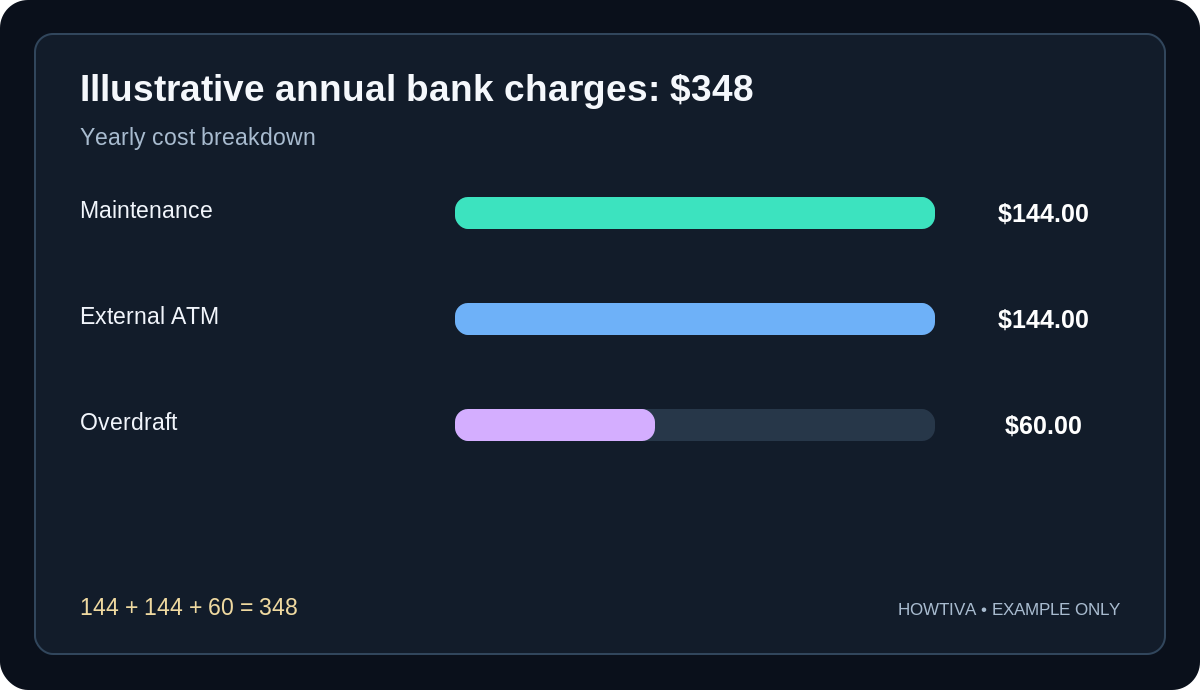
Write down every charged fee and its actual frequency. Suppose a fictional customer incurs $12 monthly maintenance for twelve months ($144), an illustrative $3 external-ATM charge four times monthly (4 × $3 × 12 = $144), and two $30 overdraft fees over the year ($60). Their illustrative yearly total is $348. It would be wrong to portray those invented prices as prevailing bank charges or legally permitted fees everywhere.
2. Check monthly account-fee waiver conditions
Ask your bank whether direct deposit, a specified balance, a certain account type or another arrangement could waive the maintenance fee. Verify how the qualifying balance is measured (daily minimum, monthly average or another rule) and when the fee is assessed. If you cannot safely meet the balance threshold, do not tie up essential emergency cash merely to save a hypothetical $12. Compare the real fee saved with what you give up by holding more money in a low-interest account. Waivers often apply only to specific accounts and may change after notification.
3. Map where and how you withdraw money
Find the network ATM locator on your bank’s official site or app. Using another institution’s ATM may trigger both your bank’s fee and the ATM owner’s surcharge. Before pressing ‘continue’, read any displayed operator fee and decline the transaction if it is not worth it. Consider legitimate fee-reimbursement features if available, but verify caps. Do not choose unsafe or inconvenient ATM locations just to avoid a charge.
4. Prevent overdrafts without creating missed-bill damage
Use low-balance alerts, a bill calendar and a buffer for essentials. Check the available funds shown by your institution, but remember pending checks, unsettled card authorizations and scheduled debits can change the picture. Ask what overdraft services and choices apply to ATM or one-time debit transactions versus checks and recurring payments; rules differ. Declining overdraft coverage on some purchases may reduce certain fees but can mean the purchase is rejected. A returned rent payment could cause a separate late charge from the biller, so focus on timing and adequate funds—not simply blocking payments.
5. Avoid avoidable service and transaction charges
Read the fee schedule for wire transfers, teller visits, paper statements, extra transactions, international transfers and currency exchange. If an account includes only a limited number of monthly transactions, count your typical pattern. Before changing statement delivery to electronic, confirm you can access and store records securely. Do not use a fee-charging service that appears cheaper if it compromises access or creates costs elsewhere.
6. Compare real account plans for your usage pattern
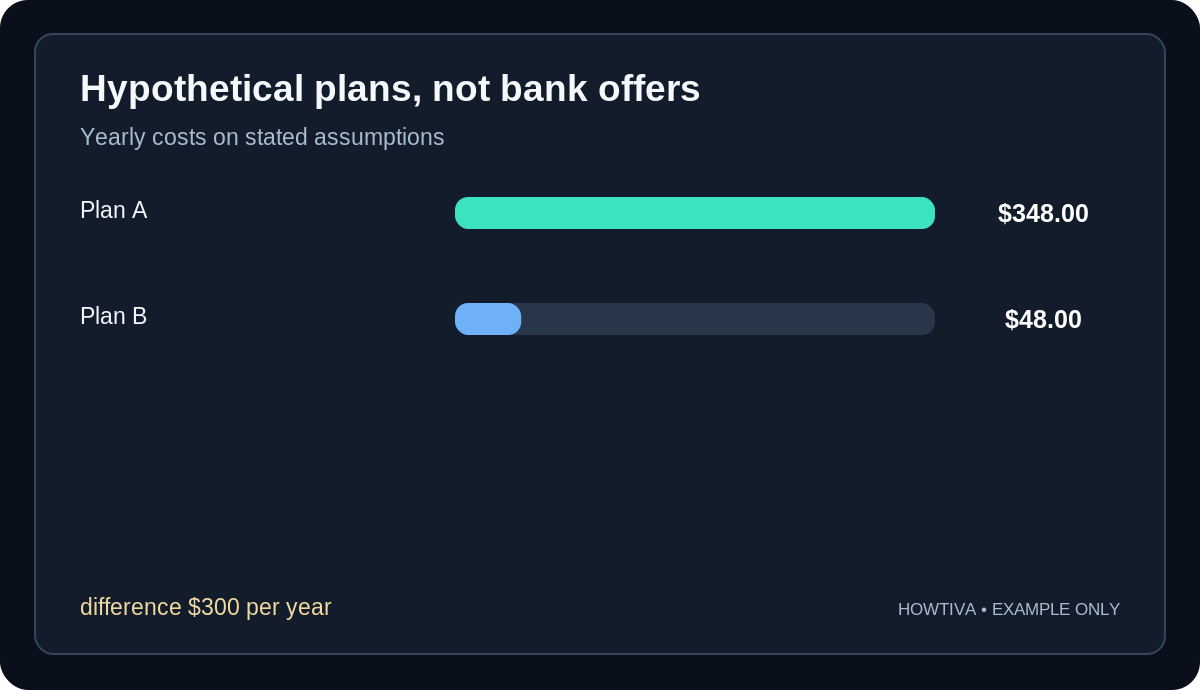
A fictional Plan A has the $348 annual fee total above. Assume another fictional Plan B has no periodic maintenance charge, no fee for the customer’s network ATM usage, and exactly $4 a month in other costs, for $48 a year. The arithmetic difference is $300 per year in this strictly defined example. The illustration is not a quote and does not prove Plan B is better: compare eligibility, overdraft policy, deposit insurance, local ATM network, service reliability, interest received or forgone, transfer limits and accessibility.
7. Change accounts carefully if the numbers justify it
If switching, verify the new provider and deposit protection regime, open the new account, list direct deposits and automated debits, and allow time for transfers to take effect. Don’t close the old account while outstanding cheques, refunds or charges may still arrive. Keep enough funds for unsettled items, obtain closure confirmation and monitor both accounts. CFPB advises consumers to compare fees and transition automatic payments deliberately. Account-switching services and rules differ by country.
8. Review the first month and every change notice
After adjusting features or account types, check the next statement for any fee that should have disappeared. Bank policies and account terms can change; log the date and confirmation of any waiver. Add a monthly review for three months and then a quarterly or annual account comparison. Seek fee refunds politely if a genuine bank error occurred, but a goodwill waiver is not guaranteed.
Troubleshooting: fee still appearing?
Maintenance charge despite qualifying deposit: ask the bank whether that deposit met its specific timing or type requirement. ATM fee despite using a familiar machine: check the network agreement and operator surcharge separately. Multiple overdraft events: inspect transaction posting order and all unsettled payments; request an explanation from the bank and fix calendar/balance alerts. Advertised ‘free’ account still charging something: distinguish prohibited monthly service charges under applicable rules from other permissible event-based fees; confirm which jurisdiction and account terms apply. Bank increased a fee: compare the notice and current account agreement; complain through official channels where appropriate.
Alternatives and trade-offs
A basic low-fee account can be sufficient for frequent debit-card purchases but may not offer free international wires or branch transactions. A higher monthly-fee package can be cheaper for someone who regularly uses multiple included services. A minimum-balance waiver may save fees but sacrifice interest you could otherwise earn; calculate both sides using your actual rates and account terms. Credit unions or local banks may have different fee structures and accessibility; compare, do not assume. People receiving government benefits or belonging to designated groups may qualify for concessions, subject to local rules.
Country notes — checked 27 October 2026
US: CFPB/FDIC explain maintenance-fee waivers and overdraft/NSF distinctions, but exact charges depend on contracts and current rules. Canada: FCAC provides detailed chequing-account comparisons and describes low-/no-cost accounts for eligible customers; certain rules may vary by institution type and account. UK: investigate bank account tariffs, arranged and unarranged overdraft costs and provider terms through official UK consumer/banking sources; US ‘opt-in’ statements do not simply transfer to the UK. Australia: Moneysmart describes low- or no-fee account options for some people and encourages checking your statement; eligibility and conditions vary. Never apply one country’s legal charge caps or consumer protections to another’s account.
Frequently asked questions
Can a bank charge for an account called free? In the US, CFPB explains that a ‘free checking’ label rules out some routine fees but not every incidental charge. Review jurisdiction and account agreement.
Will direct deposit always waive the monthly charge? No. Only if the particular bank and account provide such a waiver and you meet the stated conditions.
Can I avoid all ATM charges? Often you can reduce them with in-network machines, but foreign travel or third-party machines may still carry disclosed fees.
Is an overdraft buffer the same as overdraft protection? No. A buffer is money you keep in the account; overdraft protection is a provider’s separate service or linkage that may carry costs.
Should I close an old account immediately? Not before outstanding debits, deposits, checks and recurring payments are safely transferred or resolved.
Final checklist
- Retrieve the real fee schedule and recent statements from the provider.
- Convert all actual fees to annual cost under your typical behavior.
- Check account-specific maintenance-fee waivers and balance requirements.
- Use ATM networks and banking services that match your needs.
- Set low-balance alerts and monitor scheduled payments and posting timing.
- Compare account alternatives including waived interest, access and reliability.
- Transition deposits and debits cautiously if switching; verify any promised savings.
Sources & Further Reading
- FDIC — Overdraft and Account Fees.
- CFPB — Monthly maintenance fees and fees on ‘free’ checking accounts.
- FCAC — Chequing accounts.
- Moneysmart — Bank accounts.
Educational comparison only, not bank recommendations; all fees and plan prices are fictional. Source review date: 27 October 2026.
Use the checklists as you go, and confirm the result before moving on to a more involved repair.