How to Remove Hard Water Stains from Glass
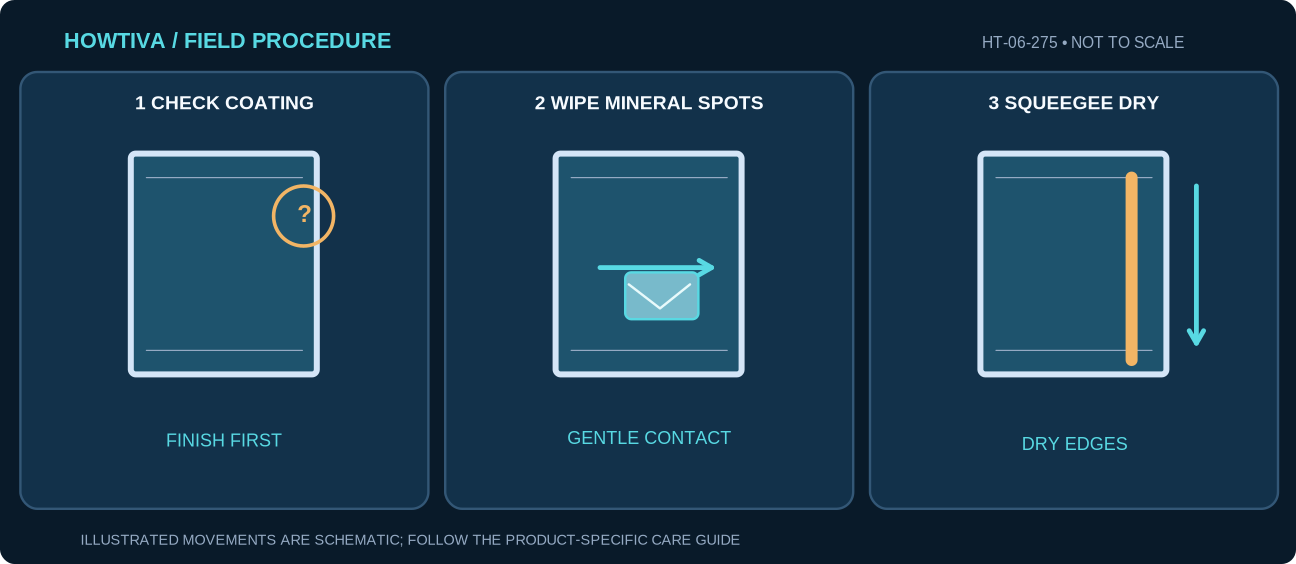
Identify whether the glass has a protective coating or adjacent delicate metal or stone. Start with water, a soft microfiber cloth and a glass-safe mild detergent, rinse and dry with a soft squeegee.
Quick answer: Identify whether the glass has a protective coating or adjacent delicate metal or stone. Start with water, a soft microfiber cloth and a glass-safe mild detergent, rinse and dry with a soft squeegee. If mineral spots remain, only use a glass manufacturer-approved deposit remover for that exact coating. Avoid abrasive pads, scraping blades and universal vinegar soaks around unknown surfaces.
For ordinary reachable window or shower glass with removable mineral deposits. Tempered-glass surface damage, silica film, acid etching, factory coatings and fog trapped between insulated panes do not behave like simple hard-water spots. This guide is not glass restoration or window seal repair.
Before you begin: safety and materials
What you need:
- Glass/door manufacturer’s care and coating information
- Soft microfiber cloths, water and compatible mild detergent
- Rubber-edged squeegee, clean drying cloth
- Optional labeled glass-compatible spot remover only when officially approved
- Protective gloves and airflow when required by product label
Step-by-step instructions
Step 1: Identify glass and adjacent trim before using chemicals
Examine whether the pane is uncoated clear glass, a shower door with CleanCoat or a specialty protected panel. Nearby chrome, aluminum, painted frames, cement grout and marble can be damaged by acids even when the pane itself tolerates them.
Step 2: Distinguish surface deposits from lasting damage
White droplet rings that move or change with mild washing suggest removable residue. Uniform cloudiness embedded in a double-pane window, scratches visible at low angles or corrosion haze may not respond. Do not treat permanent etching by escalating the scrub strength.
Step 3: Wipe off dust and grit gently
Wet and lift dirt with a clean soft cloth; rubbing dry grit can scratch glass or its coating. Choose a small test patch at the edge away from printed patterns and sealants. On Kohler CleanCoat, the maker recommends plain water and soft cloth/squeegee.
Step 4: Wash with compatible mild detergent
Use a small amount of diluted soap on the cloth and make overlapping gentle passes. Do not let cleaner accumulate inside window seals or shower-door tracks. Rinse away detergent promptly; heavy soap can itself dry into streaks.
Step 5: Evaluate a spot-specific cleaner only if approved
If spots persist after the first pass, check the official coating manual. Different glass makers may permit different mineral-removal products—even different acidic cleaners or controlled abrasives. Never assume a vinegar mixture or limescale gel is safe for an unspecified coated pane or adjoining stone.
Step 6: Rinse, squeegee and prevent fresh deposits
Rinse to remove any treatment permitted by the maker and draw a clean squeegee down the glass. Finish edges with microfiber. For shower panes dry after each use, because evaporating hard-water droplets leave deposits; investigate persistently hard water separately if needed.
Practical examples: when the procedure changes
A coated glass shower door has white droplets
Start with plain water, soft cloth and drying, which Kohler recommends for CleanCoat. Do not scrub with abrasive pads just because the deposit looks hard.
An uncoated pane has deeply fixed cloudy areas
Gentle cleaning may not remove silica or etching. Obtain the glass manufacturer’s advice before selecting a dedicated deposit remover or a glass-restoration professional.
Troubleshooting: what can go wrong
White spots return after every shower: Squeegee and towel-dry after use; repeated evaporation of mineral-bearing water is the likely mechanism.
A haze stays even when the glass is dry: It could be etched or inside an insulated assembly; do not abrade the pane to test.
An acidic product stains the frame: Stop immediately and rinse only per its finish guidance; contact the frame maker if discoloration persists.
A squeegee leaves arc marks: Clean or replace the rubber edge and remove gritty particles from the glass first.
Alternatives, materials and model differences
ShowerGuard and CleanCoat are different branded treatments; their care regimes cannot be combined indiscriminately. Manufacturers may specify mineral-removal chemicals for particular glass families, but without identifying the exact glass and frame, the safe route is gentle washing, drying and product-specific guidance.
Stop conditions and when to request qualified help
Stop if glass is chipped/cracked, window seal has failed, fittings are loose, acid could contact natural stone or unknown trim, or the cleaning agent conflicts with the stated glass coating. Do not use steel wool, razor blades or acids on an unknown surface.
Frequently asked questions
Will vinegar always remove hard-water spots?
No. Some glass makers permit specific diluted acids on defined products, while coatings and adjacent materials may prohibit them. More stubborn deposits may be silica or permanent etching.
Why is squeegeeing the most reliable prevention?
It removes water before dissolved minerals can dry in rings on the glass.
Sources & further reading
-
Sterling / Kohler: How to Clean & Care for Bath & Shower Doors
-
Kohler Assist: Shower Door CleanCoat Glass Treatment
-
Natural Stone Institute: Care & Cleaning of Natural Stone
Use the checklists as you go, and confirm the result before moving on to a more involved repair.