How to Separate Laundry by Fabric and Color
Sort laundry first by care label, then by dye risk, fabric weight and soil level. Keep plain whites, lights, brights and darks apart when practical; separate towels and denim from delicates and protect very dirty items from everyday loads.
Quick answer: Sort laundry first by care label, then by dye risk, fabric weight and soil level. Keep plain whites, lights, brights and darks apart when practical; separate towels and denim from delicates and protect very dirty items from everyday loads.
For home washing machines and regular mixed wardrobes. Actual groupings vary with dye stability, water temperature, embroidery, finishes, garment construction and washer capacity. “Cold water” alone cannot guarantee dye will not bleed.
Before you begin: safety and materials
What you need:
- Care labels and clean sorting surface
- Separate hampers or marked baskets for whites, lights and darks
- Mesh laundry bags for labeled delicate items
- Optional colorfastness testing cloth or manufacturer instructions
- Space for isolating muddy, oily or heavily soiled garments
Step-by-step instructions
Step 1: Remove anything that must not be machine washed
Read labels before grouping. Set aside handwash-only, dry-clean-only and specialty-treated garments for their own approved method. Empty pockets and check for clips, tissue, pens and loose hardware that could stain or abrade an entire load.
Step 2: Make an initial color separation
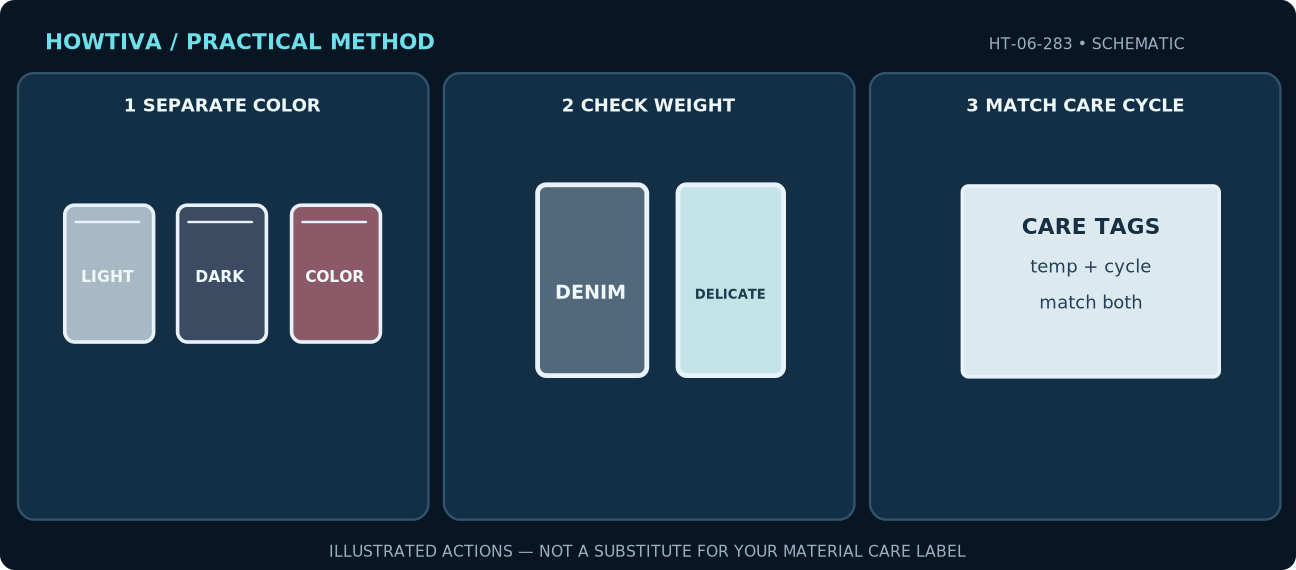
Pull out plain whites; put pastel lights in another pile; group bright saturated colors and dark items separately. Keep new, untested dark dyes away from whites and pastels. White T-shirts with colored transfers or embroidery belong with a compatible color group, not automatically in plain whites.
Step 3: Split by fiber, surface and weight
Keep fluffy towels and shedding fleece separate from dark smooth garments that attract lint. Heavy denim and bath towels can abrade lace and fine knits. Polyester athletic fabric may need a different wash program from cotton towels, even when both are the same color.
Step 4: Match the care labels within each prospective load
Compare water temperature limits, gentle-cycle marks and drying methods. When combining items, choose the most restrictive permitted setting. If one needs handwash and another normal agitation, do not force them into the same machine cycle.
Step 5: Handle stains and heavy soil separately
Pretreat known spots by stain type before washing. Keep very muddy clothing or strongly soiled items separate from lightly worn shirts; grit and residue can redeposit. Never put solvent- or fuel-contaminated clothing into an ordinary home washer/dryer cycle.
Step 6: Build balanced loads and reassess before starting
Leave space for garments to circulate according to your washer manual, without combining fragile knits with heavy towels just to fill the drum. Confirm the detergent and cycle match the entire group. Inspect any new garment after its first wash for unwanted dye release.
Practical examples: when the procedure changes
A new red sweatshirt and cream towels
Wash the saturated red garment separately or with proven colorfast similar tones, according to its label. Dye may bleed even in cool water and permanently tint pale towels.
Dark gym leggings with black jeans
Color similarity is not enough. Coarse denim, zippers and high agitation can wear smooth technical fabric; split by textile type and wash program.
Troubleshooting: what can go wrong
White socks turn pink: A colored dye source was likely mixed in. Remove any offending garment, review the labels and use label-compatible recovery methods; not all transfer reverses.
Black shirts are covered in lint: Keep terry towels and fuzzy fleece separate; clear lint traps and review load composition.
Delicate lace snags: Use gentle cycles/mesh bags as permitted and do not combine with exposed zips and heavy clothing.
Clothes stay dirty after washing: Reduce load size, sort heavily soiled pieces separately and verify detergent dosage and selected program.
Alternatives, materials and model differences
For a small wardrobe, three main color bins are a start, but continue splitting by delicate/heavy items before washing. Color-catcher sheets are not a guarantee and do not replace care labels or separate first washes of highly saturated garments.
Stop conditions and when to request qualified help
Stop before washing if instructions conflict, dye transfer is evident, unsafe residues are present or the washer would be overloaded. Seek garment-maker guidance for items with complex layered materials.
Frequently asked questions
Can I mix clothes of the same color but different fabrics?
Only if their care instructions, required agitation and drying needs are compatible. Denim and silk do not become wash partners because both are black.
Do brand-new jeans need a separate wash?
Often prudent where colorfastness is uncertain; follow the maker and keep them away from light items until stability is known.
Sources & further reading
-
GINETEX: Care Symbols
-
American Cleaning Institute: Laundry Basics
Use the checklists as you go, and confirm the result before moving on to a more involved repair.